

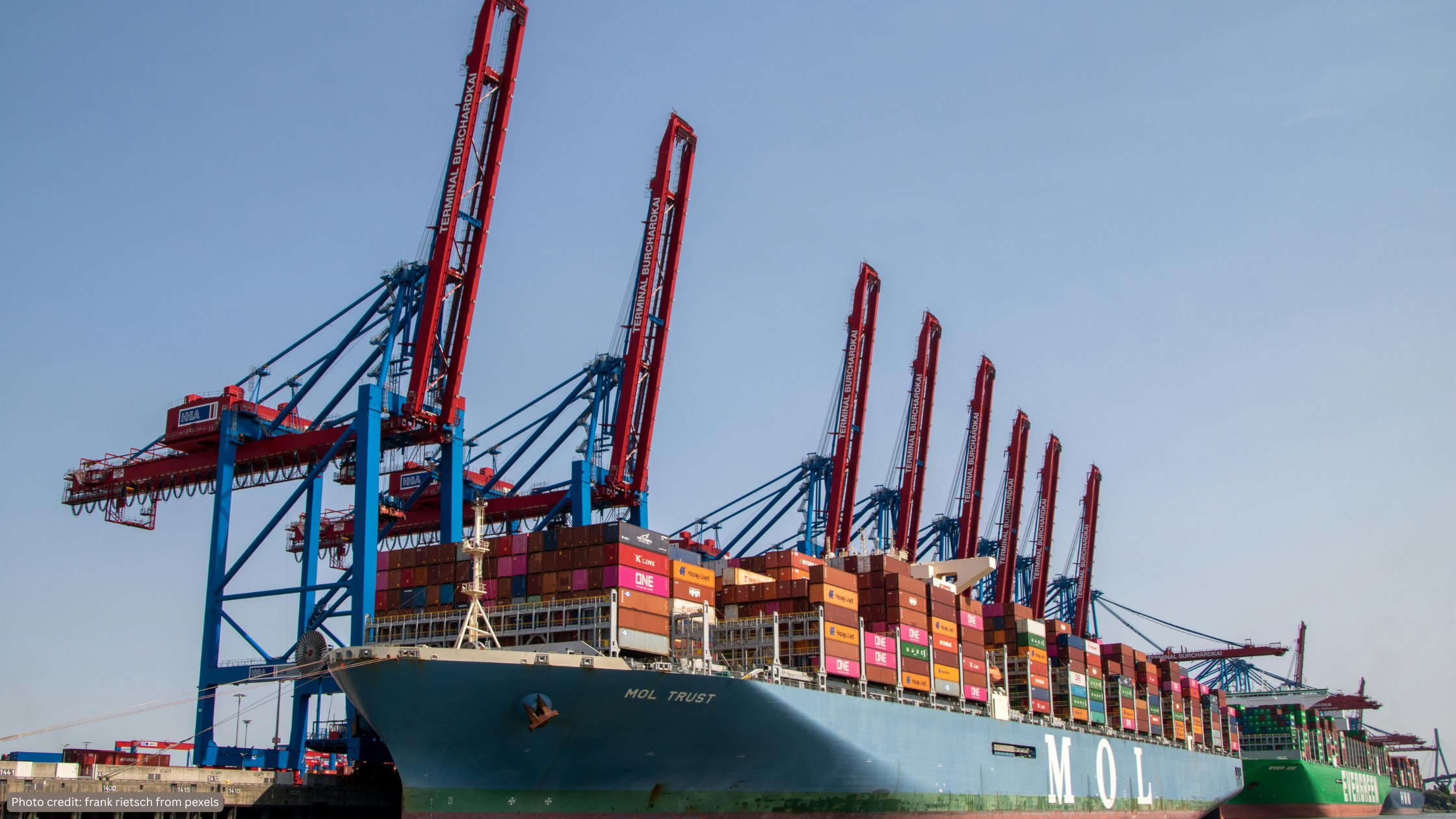
Australian exporters faced pressure from several directions in 2026. From early March, shipping lines introduced emergency conflict and war-risk surcharges as conflict disrupted services around the Strait of Hormuz and the Red Sea. ANL, owned by CMA CGM, introduced surcharges of up to US$4,000 per refrigerated container on shipments to and from affected Middle Eastern destinations. Meanwhile, changes to US trade policy brought new tariffs and uncertainty for Australian goods entering the market.
Neither disruption was within exporters’ control. However, the year highlighted the importance of having alternatives and being able to respond when conditions change.
The Middle East pushed costs onto cargo already at sea
The surcharges affected more than future bookings. Some applied to cargo already booked or in transit, leaving exporters little opportunity to reprice shipments or renegotiate contracts agreed months earlier. Agricultural exporters shipping meat, grain and fresh produce faced additional pressure as refrigerated freight costs increased.
The impact also reached domestic transport. In July, ANL increased its inland emergency fuel surcharges on road and rail movements to and from Australian ports. A conflict thousands of kilometres away was now affecting the cost of moving containers from Australian wharves to their next destinations.
For exporters operating under fixed-price contracts, this exposed a significant challenge: freight costs can change faster than commercial agreements. Businesses unable to pass on additional charges, switch routes or adjust transport arrangements had limited options to protect their margins.
When disruptions overlap
Supply chain shocks rarely arrive in isolation. An exporter facing a conflict surcharge in March could also be managing higher domestic fuel costs and changing US import tariffs by July.
Businesses that responded effectively were not immune to these pressures. They were better prepared to understand how a change in one part of the supply chain could affect costs, inventory and delivery commitments elsewhere.
The US tariff timeline illustrates how quickly trade rules can change. In February, the US Supreme Court ruled that the International Emergency Economic Powers Act did not authorise the tariffs imposed under that legislation. The US administration subsequently introduced a temporary 10% import surcharge under Section 122. On 24 July, a separate 12.5% Section 301 tariff took effect for Australian goods within scope, subject to exemptions.
These were distinct policy changes, each with different legal grounds and implications. For exporters, the challenge was understanding which measures applied to their products and shipments, and how quickly they needed to adjust.
The gaps between disruptions have also narrowed. Since COVID-19, businesses have faced pandemic-related disruption, Red Sea shipping attacks, shifting trade policies and renewed conflict in the Middle East. Treating each event as an isolated incident means planning around a period of stability that cannot be assumed.
Commercial agreements remain important, but they cannot eliminate every risk. Freight rates, surcharge clauses and tariff exemptions may change with little notice. Some changes can affect shipments already booked or goods already in transit. Contracts therefore need to be supported by contingency plans, clear responsibility for additional costs and the ability to reassess decisions as circumstances change.
Compliance adds another layer of risk. In July, the US announced new tariffs following an investigation into whether trading partners had effectively prohibited imports produced with forced labour. Australia challenged aspects of the US assessment and pointed to its existing modern slavery framework. The episode highlighted how regulatory disputes can affect market access and landed costs, not just audit results.
Exporters need reliable information about where their goods and materials originate, accurate product classifications and a clear understanding of the requirements in each market. They should also establish how customs brokers and freight forwarders handle documentation, corrections and exceptions.
What resilience actually takes
Resilience does not depend on predicting the next announcement. It depends on having alternatives in place before they are needed and being able to act when conditions change.
For Australian exporters, supplier diversification is one part of that preparation. Businesses that rely on a single supply base may benefit from lower costs, but they also face greater exposure if that source becomes unavailable. Qualifying alternative suppliers, securing additional capacity and developing new freight routes take time and investment. Waiting until a disruption hits can leave few viable options.
Diversification is not free. Maintaining additional suppliers or securing alternative freight routes can increase operating costs. The relevant comparison, however, is not simply the price of an alternative against the cheapest available option. It is the cost of maintaining flexibility against the potential consequences of being unable to supply customers.
Businesses also need the systems and processes to put their alternatives into practice. If order, warehouse and transport management systems operate in isolation, a change to a shipping route, duty rate or product’s availability can trigger manual updates across several teams. Delays in reconciling information can make it harder to respond before customer commitments are affected.
When systems share reliable information, teams can assess the operational impact of a change more quickly. They can consider whether to reroute a shipment, reallocate inventory or adjust fulfilment priorities. Technology can support these decisions, but it cannot replace available transport capacity, qualified suppliers or sound operational planning.
Reliable data is equally important for trade compliance. Exporters need to understand where materials originate, how products are classified and which requirements apply to each market.
This information must be accurate and accessible in day-to-day operations, rather than assembled manually whenever a shipment is prepared.
Consider a manufacturer deciding whether to pay 25% more for 30% of its components to maintain a second supplier. In stable conditions, the premium may be difficult to justify. If losing its primary source could halt production, the additional cost may represent worthwhile protection. The decision depends on the component’s importance, the availability of alternatives and the potential cost of disruption. Resilience is not about paying more for everything; it is about understanding where flexibility is worth the investment.
Nobody can know where tariffs, freight rates or geopolitical tensions will stand next year.
Australian exporters can, however, improve their ability to respond. That means developing alternative sources and routes, strengthening traceability, understanding exposure to changing trade requirements and ensuring teams have reliable information to make coordinated decisions.
The lesson of 2026 is that resilience is more than having a contingency plan. It is the ability to make and execute informed decisions when circumstances change. For exporters facing volatile freight costs and shifting trade rules, that capability can help prevent disruption in one part of the supply chain from spreading across the business.
The views and opinions expressed in this article are those of the author and do not necessarily reflect the views of Supply Chain Channel.

Steve Blough
Steve Blough is Chief Strategist at Infios, where he leads the company’s product innovation and development. He has more than 40 years’ experience in supply chain information systems, bringing technical expertise together with a strategic understanding of how technology supports wider business goals. His work focuses on helping businesses run more efficient supply chains through practical innovation and planning for future change.