

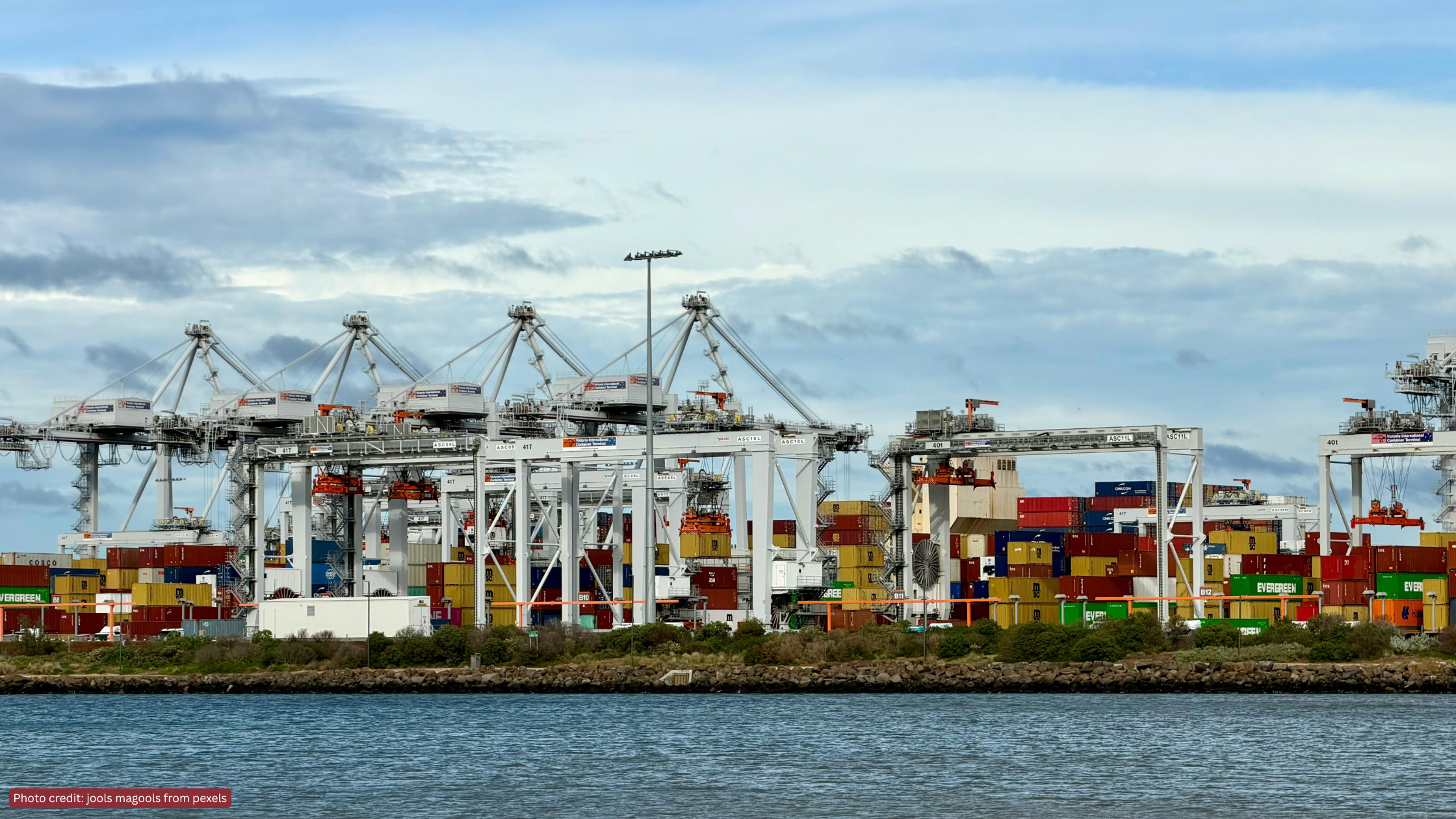
Australia’s ports are preparing for a broader range of operational threats, as researchers develop a simulation platform that lets port teams practise responding to cyberattacks and extreme weather events. The initiative aims to strengthen the coordination and decision-making that ports need to maintain operations when unexpected incidents disrupt critical infrastructure.
Flinders University developed the platform in partnership with Adelaide University, PrioriAnalytica and the Defence Science and Technology Group. It places participants in realistic crisis scenarios, requiring them to coordinate decisions, communicate across organisations and manage disruptions as events unfold.
The project received funding through the Defence Innovation Partnership’s Collaborative Research Fund and focuses on a critical element of supply chain resilience: how effectively port operators and their partners respond when normal operations break down.
Preparing for disruption beyond the port gate
Ports connect international shipping with road and rail networks, warehouses and distribution centres. When an incident interrupts port operations, the effects can spread well beyond the terminal, delaying cargo movements and disrupting businesses throughout the supply chain.
Cyber incidents pose a growing challenge as maritime operators rely more heavily on digital systems to manage navigation, cargo handling and communications. The Australian Maritime Safety Authority warns that vulnerabilities in these systems can expose maritime operations to cyber threats, making cybersecurity a shared responsibility across the sector.
Extreme weather creates another source of disruption. Severe conditions can affect port access, damage infrastructure and delay cargo movements, while a cyber incident can compromise the systems operators rely on to coordinate their work. In either case, teams must communicate effectively and restore normal operations as quickly and safely as possible.
For supply chain operators, resilience therefore involves more than preventing an incident at the port itself. Businesses also need to understand how quickly port operators, freight providers and other organisations can coordinate a response and limit disruption across the wider network.
Testing how teams respond under pressure
The research partners designed the simulation platform to help port owners, operators and service providers practise responding to realistic crisis scenarios before they encounter similar events in real operations.
Rather than concentrating solely on technical systems, the exercises examine how teams communicate, allocate responsibilities, make decisions and coordinate their actions under pressure. This approach recognises that even organisations with strong technical safeguards can struggle to manage a crisis if people cannot share information or agree on the next steps.
Test runs revealed differences in team behaviour during simulated cyber incidents and severe-weather events. The researchers reported that the exercises highlighted factors influencing communication, coordination and decision-making, although the published findings do not identify a single response model that would suit every situation.
The results underline the importance of preparing people and processes alongside technical safeguards. A disruption can involve several organisations, each with its own responsibilities, information sources and operational priorities. Without clear communication and coordination, one party’s decisions can complicate recovery efforts elsewhere in the network.
Simulation exercises give teams a controlled environment in which to practise these interactions, identify weaknesses and examine how their decisions affect other participants. They can then use those lessons to refine response procedures before a real incident puts the arrangements to the test.
Resilience depends on recovery as well as prevention
Cybersecurity measures remain essential, but supply chain operators cannot base their resilience strategies on the assumption that every incident can be prevented. They also need practical plans for responding when systems fail, infrastructure becomes unavailable or severe weather interrupts normal operations.
For maritime operators, that means defining responsibilities, maintaining communication during an incident and establishing how teams will resume operations safely. It also means considering how disruptions could affect shipping schedules, cargo handling and inland freight movements that depend on the port.
The simulation project could also support work in other critical infrastructure environments, including emergency management and healthcare, according to the research team. Its broader application reflects a common challenge across interconnected systems: organisations must coordinate their response even when an incident crosses operational and organisational boundaries.
For Australia’s freight sector, the lesson is clear. Protecting individual assets matters, but resilience also depends on how effectively organisations work together when disruption spreads across the network.
As cyber threats and extreme weather continue to test critical infrastructure, simulation exercises could give port operators and their partners a practical way to strengthen crisis response, improve coordination and keep freight moving when normal operations are interrupted.
Also read: Lessons from global supply chain disruptions that you should know

Yvette is a Content Producer at Akolade, producing stories for Supply Chain Channel, an Australian learning ecosystem created to address the need for information, networking, case studies, and empowerment for everyone in the supply chain sector.