
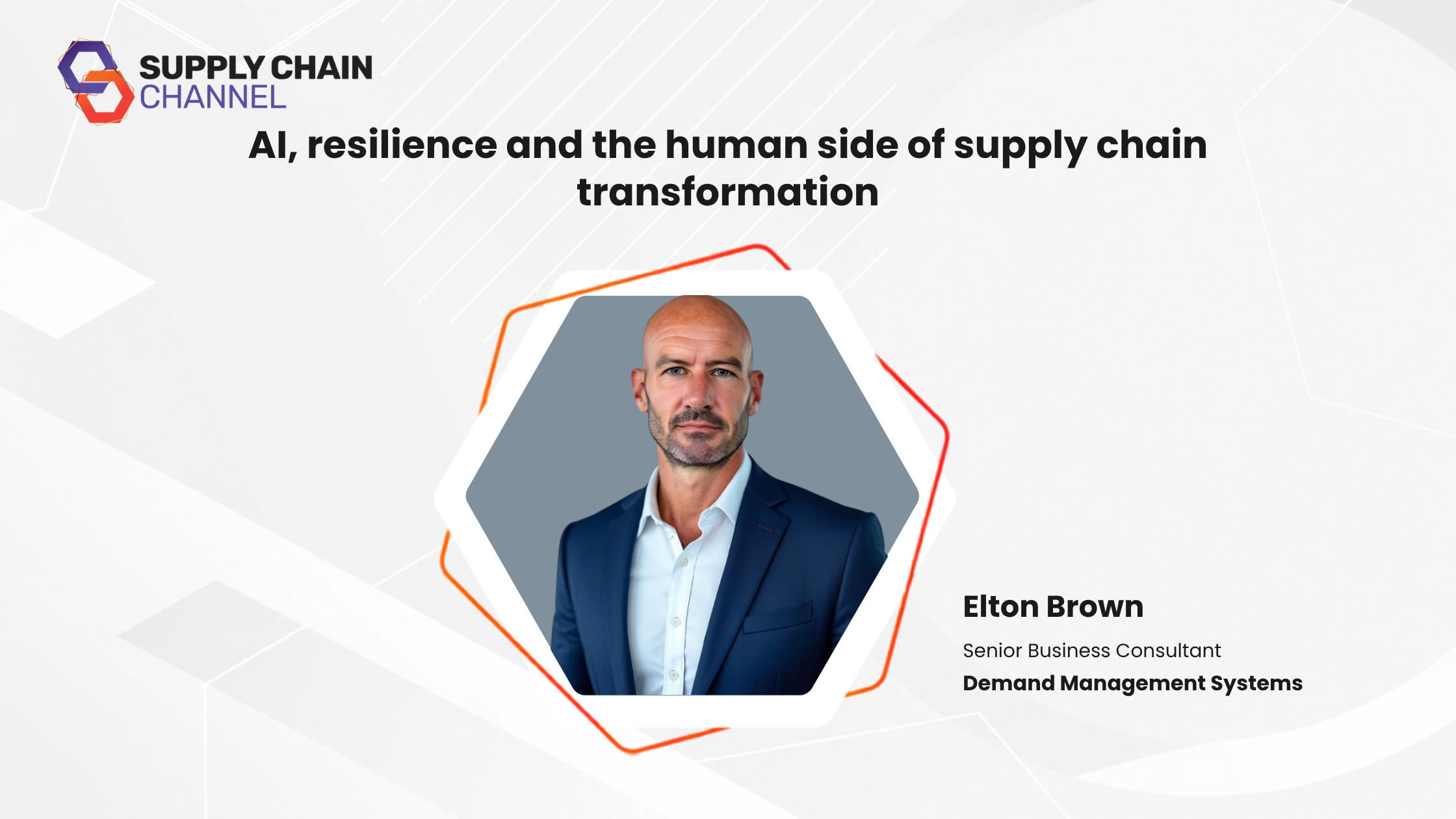
For Elton Brown, Senior Business Consultant at Demand Management Systems, a career in supply chain began with a natural inclination to solve problems.
After studying artificial intelligence at university, Brown moved into coding technology for supply chains — a decision that would ultimately lead to a career spanning technology, transformation and supply chain management.
“As a left-brained Aquarian, I found myself solving problems all day, every day,” Brown says. “After studying AI at university, I moved into coding technology for supply chains and never looked back.”
That problem-solving mindset continues to underpin his approach to the sector, particularly as supply chains navigate rapid technological change and increasingly complex operating environments.
For Brown, that constant change is also part of the appeal.
“Every day is different, and every problem is an opportunity to learn more,” he says.
Learning from global transformation
One of the defining experiences of Brown’s career came in his 30s, when he served as program manager for a major global systems rollout across Europe and Asia.
While the project exposed him to the complexities of implementing technology across different markets, it was the human side of transformation that left a lasting impression.
“Discovering the different cultures, how they work and how they affect the ability to change was amazing,” Brown says.
“I think it equipped me to be more tolerant and curious around the human aspect of transformation.”
The experience shaped Brown’s perspective on an increasingly important consideration for supply chain leaders: transformation is not solely a technology challenge.
As organisations adopt AI, automation and increasingly sophisticated supply chain systems, how people work, make decisions and respond to change can be just as important as the technology itself.
Keeping pace with rapid change
Staying current presents another challenge as developments across AI and supply chain technology continue to accelerate.
Brown says maintaining awareness of emerging trends requires deliberate effort, drawing on industry publications each morning and podcasts during his downtime.
“Change is so fast now that even a few weeks off can have me feeling like a laggard!” he says.
His interest in the intersection of technology and supply chain has also extended into education.
Alongside his role at Demand Management Systems, Brown lectures at the University of Sydney on Intelligent Supply Chain Management: AI for Resilience & Sustainability, a micro-credential course for professionals and graduates.
The course draws on case studies and industry discussions to examine the role of AI in building more resilient and sustainable supply chains.
For Brown, this intersection between emerging technology and practical supply chain challenges remains an important area of exploration.
Also read: Featured Leader: Melo Calarco on building resilience through workplace wellbeing
Exploring risk and resilience
Looking ahead, Brown is particularly interested in understanding how Australian supply chains can strengthen their resilience.
Asked about a dream project, he points to the prospect of working with his mentor, University of Sydney Professor Ben Fahimnia, to undertake deeper research into risk and resilience across Australian supply chains.
“He has a great mind for research and how humans make decisions,” Brown says.
“A dream campaign would be to conduct deep research into risk and resilience in Australian supply chains.”
The topic brings together several threads that have shaped Brown’s career — technology, decision-making, transformation and the ability of supply chains to adapt to changing conditions.
And despite working in an industry increasingly shaped by sophisticated technology, Brown places considerable value on genuine professional connection.
“I don’t enjoy being sold to unless there’s genuine interest and connection,” he says.
Instead, he encourages supply chain professionals to reach out and exchange ideas.
“Please connect with me on LinkedIn. I love to chat — online meetings or messages — about anything supply chain related.”
From coding supply chain technology to managing global systems transformation and now exploring AI, resilience and sustainability through consulting and education, Brown’s career reflects the changing demands placed on supply chain professionals.
His experience also points to a consideration that can sometimes be overshadowed by discussions about new technology: successful transformation depends not only on the systems organisations introduce, but on the people who use them, make decisions around them and ultimately turn technology into meaningful change.
Step into the spotlight: Become a Featured Leader on the Supply Chain Channel.

Yvette is a Content Producer at Akolade, producing stories for Supply Chain Channel, an Australian learning ecosystem created to address the need for information, networking, case studies, and empowerment for everyone in the supply chain sector.