Figures from the Australian Bureau of Statistics show that China is Australia’s largest trading partner by far, with two-way trade amounting to $194.6 billion (AUD), or 24.4 percent of the country’s total bilateral trade, in the fiscal year 2017-2018 (the latest stats available).
To put this in perspective, Australia’s second-largest trading partner is Japan, which accounts for 9.7 percent of the total, followed by the United States, at 8.8 percent.
Australian exports to China totalled $123.3 billion (AUD) in the same fiscal year, representing 30.6 percent of Canberra’s total exports, while Australian imports from China were worth $71.3 billion (AUD), or 18 percent of the total.
These figures indicate the extent of Australia’s exposure to the severe supply chain disruption being experienced in China, following the outbreak of the Coronavirus epidemic in December.
Let’s take a closer look at how Australia’s exports to, and imports from, China are being impacted by the supply chain disruptions:
How Exports Have Been Affected
Australia’s exports to China include iron ore, coal, and natural gas, agricultural products led by beef, barley, and wool, and fish, including shrimps and lobsters.
China’s decision to quarantine the city of Wuhan, where the virus was first detected, and to close factories, enforce massive lockdowns, and institute surveillance measures countrywide, has caused disruptions in Australia’s outbound supply chains.
The effects include:
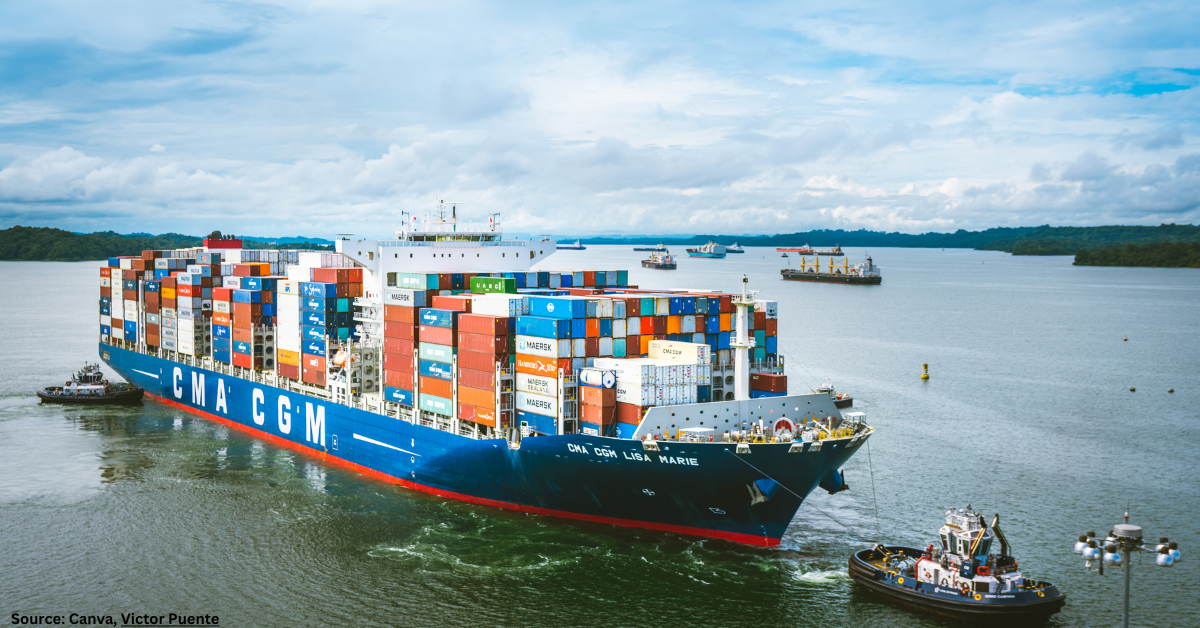
- Severe disruption to shipping, with many Chinese ports operating at drastically reduced capacity and around 200 sailings cancelled
- A dip in demand for iron and coal, as factories in China fall idle
- A reduction in demand for Australian beef, wines, and fisheries products, especially shrimps and lobsters, as fewer Chinese are going out to restaurants and bars, due to fears of being infected by the virus
While the full impact of the virus on Australian exports to China is still to be assessed, the following reports give some idea of the pervasiveness of the supply chain problems:
- Prices of Australian iron ore and LNG have slumped as traders account for in a dip in demand, according to Bloomberg.
- Beef Central reports that the impact of Coronavirus and the slowdown in demand from China, the biggest importer of Australian beef, has pushed livestock prices lower.
- The world’s largest rock lobster exporter, the Geraldton Fishermen’s Co-Operative, put exports of lobsters and dragon shrimps to China on hold, local media report.
- According to Smart Company, exporters have reported that wine sales to China were down by as much as 90 percent in the first two months of 2020.
How Imports Have Been Affected
Australian imports from China mainly comprise manufactured goods, including telecommunications equipment, IT products, furniture, home ware, clothing, toys, sports equipment, and televisions.
As with exports, the Chinese lockdowns and quarantines have disrupted Australia’s inbound supply chains and played havoc with imports.
The rush by Australians to stock up with toilet paper, hand sanitisers, rice, disinfectants, and eggs among other things not directly connected with disruption to Chinese supply chains, is mainly linked to nervous consumer stockpiling.
According to psychology experts asked to comment on this phenomenon, the tendency toward panic buying is due to the nature of the Coronavirus event, which unlike more acute natural disasters, presents a largely unknowable prognosis relating to impact-timescales and intensity.
But economists and analysts quoted by Channel 9 TV say that the longer the Chinese shutdown lasts, the more Australians will start experiencing genuine shortages of the following items:
- Car parts
- Clothing
- Footwear
- Household goods
- Fridges
- Washing machines
- iPhones
- Construction materials
How Australia’s Reliance on China has Evolved
Australia was not always as reliant on China for its imports as it is today. Back in 2000, the picture looked like this, according to World Bank figures:
Top Five Trading Partners and Value (in AUD) of Imports to Australia in 2000
- United States, $21.774 billion – partner share 19.92 percent.
- Japan, $14.376 billion – partner share 13.16 percent.
- China, $8.505 billion – partner share 7.78 percent.
- United Kingdom, $ 6.374 billion – partner share 5.83 percent.
- Germany, $5.471 billion – partner share 5.01 percent.
Ten years later, however, China topped the list.
Top Five Trading Partners and Value (in AUD) of Imports to Australia in 2010
- China, $37.3 billion – partner share 14.5 percent.
- United States, $34.9 billion – partner share 13.6 percent.
- Japan, $18.8 billion – partner share 7.3 percent.
- Singapore, $14.7 billion – partner share 5.7 percent.
- Thailand, $13.9 billion – partner share 5.4 percent.
And in 2019, China is firmly entrenched in the top spot
Top Five Trading Partners and Value (in AUD) of Imports to Australia in 2019
- China, $ 71.3 billion – partner share 18 percent.
- United States, $ 48.8 billion – partner share 12.3 percent.
- South Korea, $28.7 billion – partner share 7.3 percent.
- Japan, $26.3 billion – partner share 6.6 percent.
- Germany, $18.2 billion – partner share 4.6 percent.
The Vulnerability of Australia’s Imports and Exports
A look at what is being imported and exported will give us a better idea of the range of products that could be affected should the world economy go into meltdown due to the virus, as some doomsday economists are predicting.
Australia’s Main Imports and Exports 2017-18
The following tables show Australia’s main imports and exports in the fiscal year 2017-18 (the latest statistics available). Source Australian Bureau of Statistics.
Exports:

Areas of Vulnerability
- Iron ore: Already Rio Tinto PLC, which operates one of the world’s largest iron ore mines in the Pilbara area of Western Australia, has warned, in its annual results report, that the epidemic is threatening its supply chain and that it is preparing for some short-term impacts.
- Education-related travel services: Australia has banned entry to foreigners who have been in mainland China within the previous 14 days. This has drastically affected the 260,000+ Chinese students studying in Australia, who account for about 0.6 percent of the country’s GDP. Many had returned home for the Chinese New Year only to find themselves trapped there.
- Natural gas: China imports more than 50 percent of its natural gas needs from Australia. The drop-off in demand from China will have a significant negative impact on this sector.
- Beef: As mentioned above, beef exports to China have slowed to the point where the price of livestock has slumped.
Imports:

Areas of Vulnerability
- Personal travel services: A total of 9.47 million people visited in Australia in 2019 accounting for about 3.1 percent of the country’s GDP. The dive in global tourism will significantly impact this sector.
- Refined petroleum: Australia sources most of its refined petroleum products from Singapore,which, with 138+ confirmed cases, is also in the COVID-19 firing line. Australia has little independence when it comes to oil supplies, which, under the circumstances, bodes ill for the country’s energy security.
- Telecom equipment and parts/computers: Australia is heavily dependent on China for these products and components, and the two sectors are certain to take hefty knocks.
- Freight transport services: Shipping and air freight are among the services most badly affected by the Coronavirus epidemic, and Australia will not be able to avoid the knock-on effect.
Diversification is the Key
Aware of the dangers of being over-reliant on a single trading partner, Australia had, even before the outbreak of the virus, started trying to diversify its markets by launching negotiations for free trade agreements with countries such as Indonesia, India, Japan, South Korea, and the United Kingdom.
These agreements, which Australia in all likelihood will now try to tie up as speedily as possible, will open new supply chain sourcing options for the country, especially in other parts of Asia—fulfilling a longer term goal of the country’s government.
However, while that may be a solution for the longer-term future, Australia has little choice for now but to ride out the rapidly-spreading COVID-19 epidemic the best way it can.
A Testing Time for Australian Supply Chain Operators
Professionals in the supply chain management sector can expect the months to come to be a wild ride indeed, during which they may need to contend with:
- Extreme fluctuations in demand during and after the peak of the Coronavirus event
- Bullwhip effects that could be in play for months as markets try to normalize
- Unpredictable levels of domestic and international shipping capacity
- Unprecedented challenges in forecasting and inventory sizing throughout 2020 and perhaps even beyond.
If there is a silver lining for Australian supply chain and logistics managers to the dark cloud of COVID-19, it’s the fact that challenge, change, and disruption are nothing new to those of our ilk.
Now is the time for cooperation and collaboration, innovative thinking, and for drawing on collective experiences from the multitude of industries that our profession serves. Coronavirus is a big disruption, and will drive a lot of change, which ultimately means the learning experience will be of great future value after the crisis abates.
Hubei vs. Covid-19: An In-Depth Focus on Expected Pharmaceutical Supply Chain Disruptions & Drug Shortages































Follow us on social media