
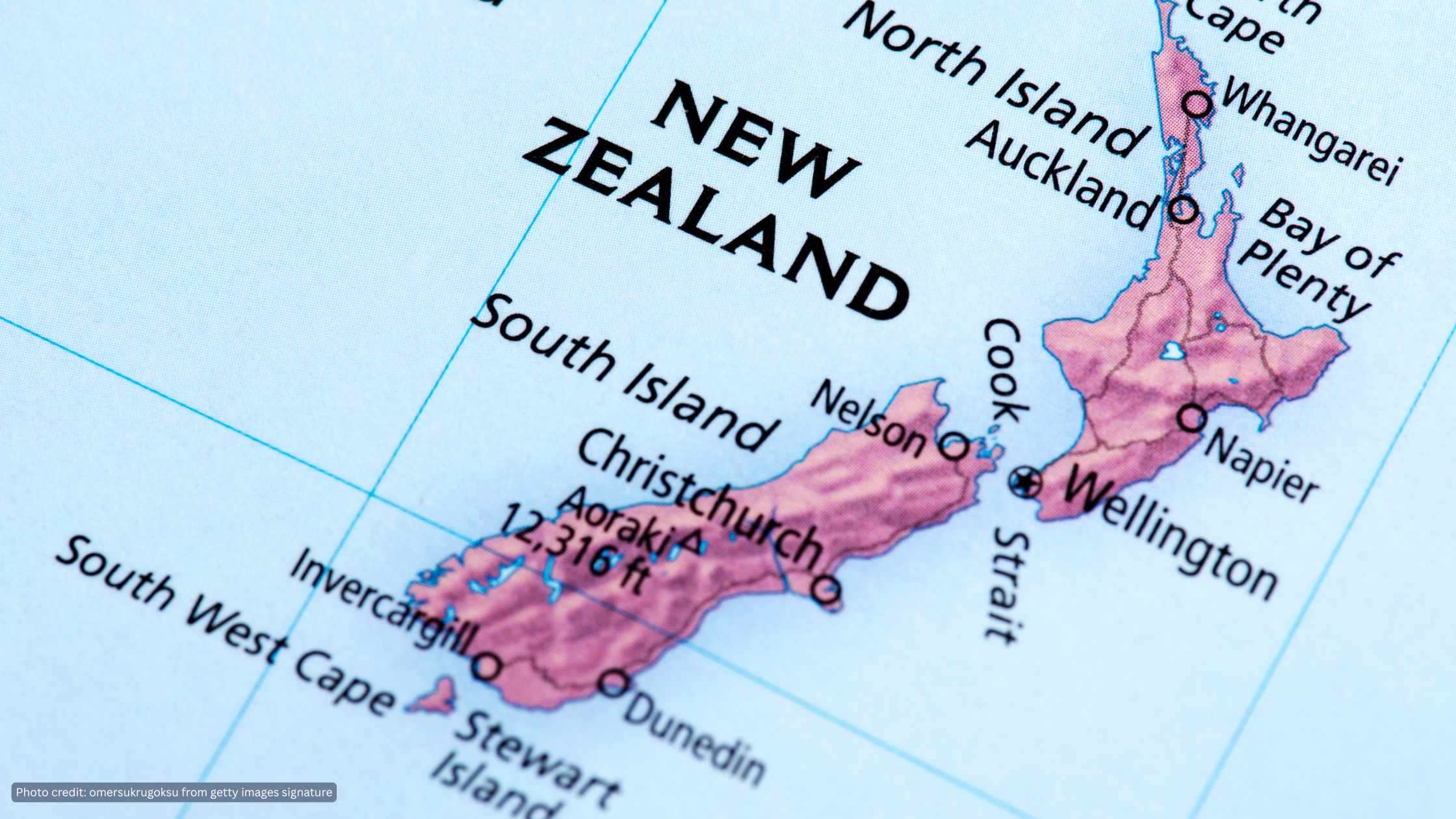
New Zealand’s freight network operates within a geography that creates both advantages and constraints for supply chains.
Two main islands, a long coastline, mountainous terrain and widely dispersed production regions mean goods often rely on several transport modes before reaching domestic customers or international markets.
At the same time, New Zealand’s distance from major global markets makes efficient ports and international shipping connections particularly important.
The result is a freight system where road, rail, coastal shipping, ports and inter-island connections depend heavily on one another.
Understanding that geography helps explain why disruptions at individual transport links can have consequences across New Zealand’s wider supply chain.
Ports connect an island economy to global markets
New Zealand’s international supply chains depend heavily on maritime transport.
Ports handle the movement of agricultural exports, manufactured goods, vehicles, machinery, consumer products and other cargo between New Zealand and overseas markets.
But a port is only one part of that journey.
Export cargo must travel from farms, factories and warehouses to the waterfront, while imported goods need to move from ports into distribution networks serving businesses and consumers.
That makes landside connections critical.
Road and rail capacity around ports can influence how quickly cargo moves through the supply chain even when marine terminals themselves have sufficient capacity.
The two-island network creates a natural constraint
Cook Strait creates a physical break between the North and South Island transport networks.
Freight moving between the islands cannot simply continue along the same road or railway.
Vehicles and rail freight need maritime connections to cross the strait, making ferry capacity and reliability an important component of the domestic supply chain.
Disruption to those services can affect freight movements between the islands and require businesses to adjust schedules, inventory and transport arrangements.
The strait demonstrates how New Zealand’s geography can concentrate freight movements through particular pieces of infrastructure.
Where few alternatives exist, maintaining the reliability and capacity of those connections becomes especially important.
Mountainous terrain shapes road and rail routes
New Zealand’s topography also influences where freight infrastructure can operate.
Mountain ranges, rivers and narrow coastal corridors restrict the number of practical routes available in parts of the country.
Roads and railway lines may share the same geographic corridors because there are few alternatives through difficult terrain.
That concentration can increase vulnerability when earthquakes, landslides, flooding or severe weather affect those routes.
The consequences can extend beyond local transport.
If a route connects a production region with a port or major distribution centre, disruption can affect businesses elsewhere in the country and potentially international shipments.
Regional production depends on national connections
New Zealand’s major export industries operate across regional supply chains.
Agriculture, forestry, food production and manufacturing often begin outside the country’s largest cities.
Products must therefore travel from regional production areas to processing facilities, warehouses or ports before reaching customers.
The quality of regional road and rail connections can influence the efficiency of that journey.
This also makes local infrastructure part of the national freight network.
A regional road carrying dairy, forestry or horticultural products may ultimately connect with an international supply chain even if the road itself sits far from a major port.
Road freight provides flexibility
Road transport plays a central role because it can reach locations that rail and shipping cannot directly serve.
Trucks connect farms and factories with processing facilities, warehouses, ports and retail networks.
They also provide the first- and last-mile connections needed for freight moving by rail or sea.
However, dependence on roads creates challenges when alternative routes are limited.
Congestion around growing urban areas can affect delivery reliability, while weather and natural hazards can disrupt regional corridors.
Maintaining road access is therefore important not only for trucking operators but also for other modes that depend on road freight at either end of the journey.
Rail and coastal shipping provide additional capacity
Rail plays an important role on corridors where freight volumes and distances support its use, particularly for bulk and containerised cargo.
Coastal shipping provides another way to move goods between regions without relying entirely on long-distance road transport.
Neither mode eliminates the need for trucks.
Instead, they form parts of a multimodal network in which freight can move by different modes during different stages of its journey.
Strong connections between those modes can improve efficiency and provide additional options when particular parts of the network face capacity constraints or disruption.
Geography makes resilience especially important
New Zealand is exposed to earthquakes, flooding, landslides, storms and other natural hazards capable of disrupting transport infrastructure.
Its geography can magnify the consequences because alternative routes are not always readily available.
The 2016 Kaikōura earthquake demonstrated how a major event can simultaneously affect road and rail infrastructure on a nationally important freight corridor.
Events like this underline the importance of understanding supply chains as connected networks rather than individual roads, railway lines or ports.
Resilience can involve strengthening infrastructure, maintaining alternative routes, using multiple transport modes and ensuring businesses have contingency plans when normal connections fail.
Freight efficiency depends on the whole network
New Zealand cannot change the geography underlying its freight system.
What supply chains can change is how effectively different parts of the network connect and how well they respond when those connections come under pressure.
Ports need efficient road and rail access. Regional producers need reliable links to processing facilities and export gateways. Inter-island freight depends on maritime connections, while road transport provides critical links between almost every mode.
For businesses, this means supply chain performance depends on more than the efficiency of an individual warehouse, carrier or port.
New Zealand’s geography makes the connections between them equally important.
As freight requirements evolve, maintaining those connections and providing alternatives where possible will remain central to keeping goods moving between New Zealand’s regions and the rest of the world.

Yvette is a Content Producer at Akolade, producing stories for Supply Chain Channel, an Australian learning ecosystem created to address the need for information, networking, case studies, and empowerment for everyone in the supply chain sector.