
Cheaper industrial land can reduce property costs, but moving warehouses farther from customers and major freight corridors can increase transport distances, driver time, and overall fulfilment costs.
For Australian retailers, wholesalers and logistics operators, warehouse location is therefore more than a property decision.
Where a facility sits can influence how efficiently goods move between ports, airports, major roads, distribution centres, stores and customers. It can also affect access to labour, warehouse capacity and the ability to meet increasingly demanding delivery expectations.
As cities grow and industrial development competes with other land uses, businesses need to consider whether savings on property translate into higher costs elsewhere in the supply chain.
Location affects more than property costs
Not all industrial land provides the same value to a fulfilment network.
A distribution centre positioned near a motorway interchange, port or intermodal terminal can produce different transport outcomes from a facility located further from major freight routes.
Distance influences how many kilometres vehicles travel, how much time drivers spend completing each journey and how efficiently transport capacity can be used.
These differences become particularly important for facilities handling large volumes of inbound and outbound freight.
A cheaper site further from customers may reduce rent or land costs, but longer transport distances can offset some of those savings over the life of the facility.
Warehouse location decisions therefore need to consider total fulfilment costs rather than property costs alone.
Development-ready land determines warehouse capacity
Industrial zoning does not automatically make land suitable for modern warehouse operations.
Distribution centres can require substantial electricity connections, telecommunications, water and sewerage infrastructure, stormwater systems and appropriate road access.
Heavy-vehicle operations create additional requirements, including suitable site entrances, turning areas, loading zones and surrounding roads capable of handling regular truck movements.
Automation can increase infrastructure requirements further.
Highly automated distribution centres may need significant electricity capacity and specialised building configurations, while temperature-controlled facilities have their own energy and infrastructure demands.
A site may therefore appear suitable based on its size and location but still require substantial investment before it can support the intended operation.
For businesses trying to add warehouse capacity, the availability of serviced land can be as important as the amount of industrial land itself.
Moving further out creates trade-offs
Urban growth can place pressure on industrial areas close to established freight infrastructure and customer markets.
One response is to locate new warehouses further towards metropolitan fringes where larger sites may be available.
That can provide room for bigger facilities, truck courts and future expansion, but distance introduces another trade-off.
Moving inventory further from consumers can increase the kilometres required for final delivery and make faster fulfilment more difficult or expensive.
This becomes particularly relevant as retailers offer services such as next-day delivery, Click & Collect and Ship from Store.
Customer expectations may encourage businesses to position inventory closer to demand, while property availability and cost can push warehouse capacity in the opposite direction.
The lowest-cost property option may therefore not produce the lowest-cost fulfilment network.
Freight connections shape warehouse productivity
Warehouse performance also depends on what happens outside the building.
A highly efficient distribution centre can still face delays if surrounding roads are congested, heavy-vehicle access is restricted or connections to ports and other freight hubs are inefficient.
Industrial land and transport planning are therefore closely connected.
Major freight corridors provide limited benefit if warehouses and transport depots cannot access them efficiently. Likewise, expanding industrial precincts without sufficient road or rail capacity can create bottlenecks as freight volumes increase.
Poor external connections can translate into longer vehicle cycle times, less predictable arrivals and additional pressure on warehouse scheduling.
That makes transport access part of the warehouse productivity equation.
Large facilities require room to grow
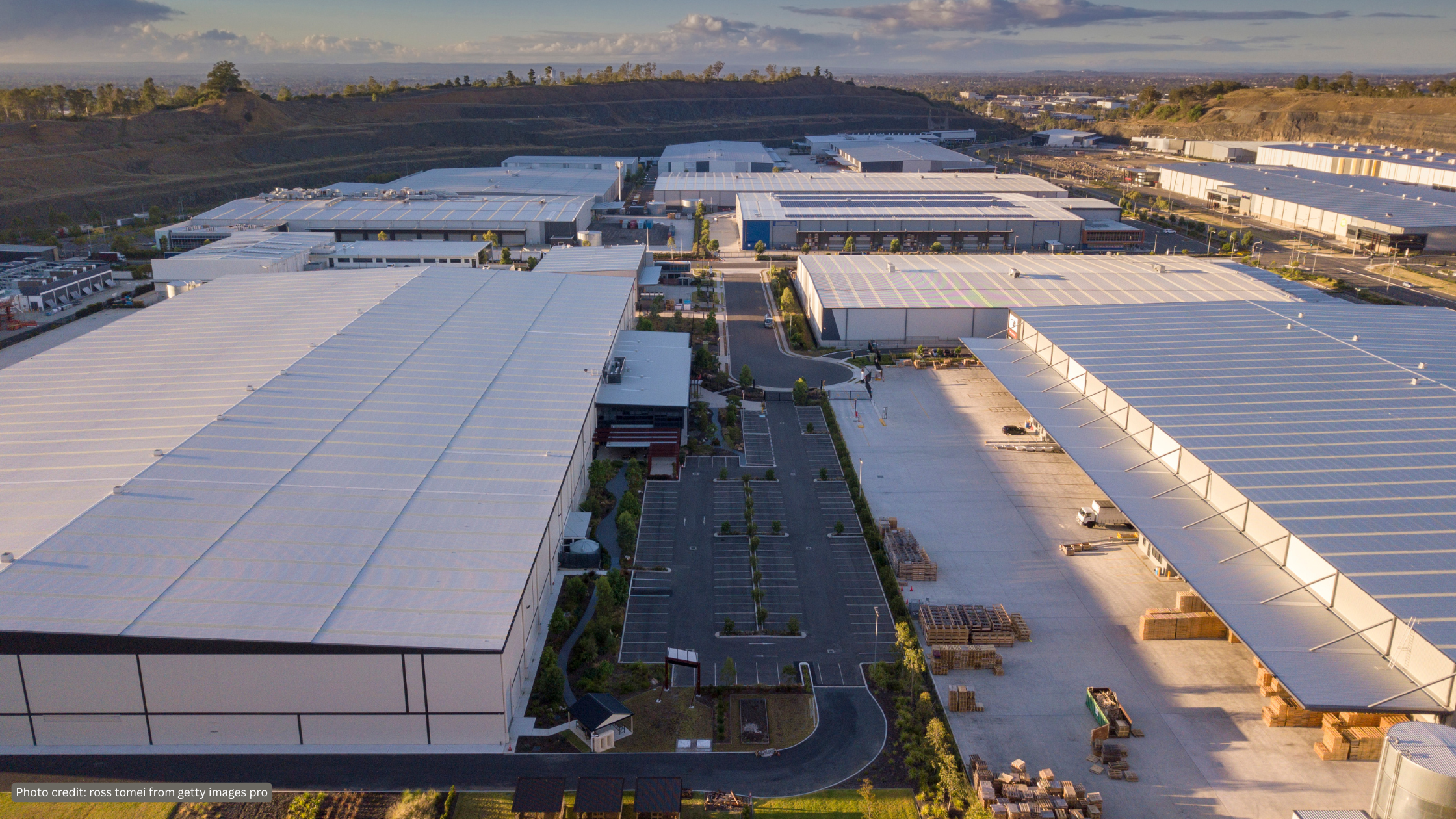
Modern distribution and fulfilment centres can occupy tens of thousands of square metres, with additional land required for loading areas, truck movements, parking and supporting infrastructure.
Once established industrial precincts approach capacity, existing operators can face limited options for expansion.
Relocating is not necessarily straightforward.
A replacement site needs to provide sufficient space while maintaining access to workers, freight corridors, customers and infrastructure.
Moving may solve a warehouse capacity problem while creating additional transport or labour challenges elsewhere.
Businesses considering new facilities therefore need to account not only for current requirements but also how their networks may need to change as order volumes and fulfilment channels evolve.
The cheapest site is not always the lowest-cost option
Supply chain capacity is often discussed in terms of warehouses, highways, ports and technology, but the location connecting those assets can be just as important.
For retailers and logistics operators, property costs need to be weighed against transport kilometres, labour access, infrastructure, warehouse capacity and customer service requirements.
A more expensive site with strong freight connections and proximity to customers may reduce costs elsewhere. A cheaper site may provide more space but increase transport requirements.
There is no single location strategy that works for every fulfilment network.
As businesses balance warehouse capacity with faster and more flexible customer service, the relevant question is not simply where industrial land is cheapest.
It is which location allows the entire fulfilment network to operate at the right cost and service level.
Also read: How Australian warehouses are evolving into intelligent, adaptive hubs

Yvette is a Content Producer at Akolade, producing stories for Supply Chain Channel, an Australian learning ecosystem created to address the need for information, networking, case studies, and empowerment for everyone in the supply chain sector.