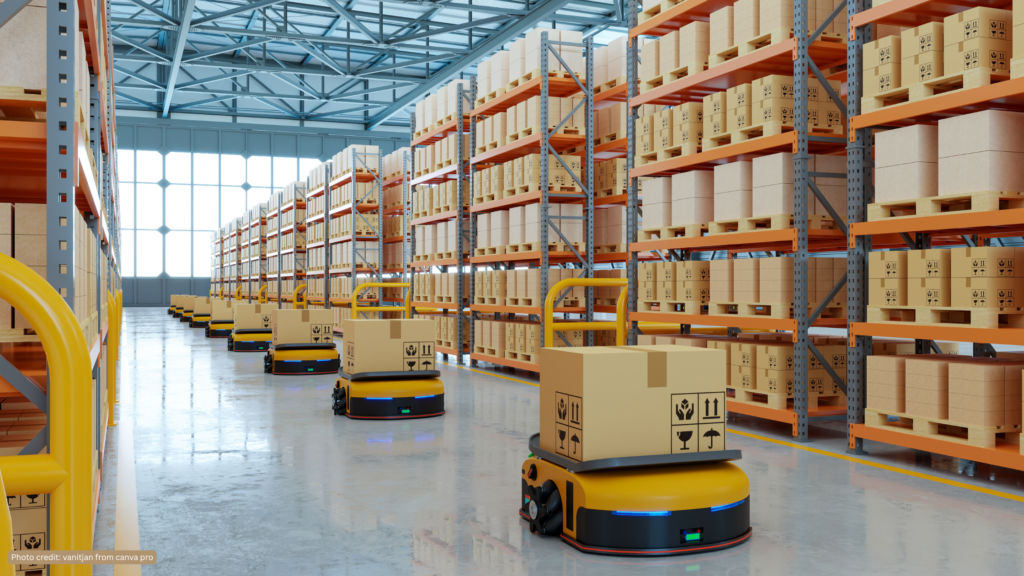


Running out of stock can cost a business customers. Holding too much can leave valuable capital sitting on warehouse shelves.
Finding the balance between availability and working capital is one of supply chain management’s longstanding challenges. For Australian and New Zealand businesses, the calculation is complicated by long international lead times, geographically dispersed markets and exposure to disruptions across global shipping networks.
Inventory provides protection against uncertainty, but that protection comes at a cost. The challenge is determining where additional stock provides genuine resilience and where it simply ties up cash.
Inventory is a buffer against disruption
Supply and demand rarely align perfectly.
Retailers cannot know exactly what customers will buy each week, while manufacturers cannot always rely on components arriving precisely when production needs them.
Safety stock helps absorb that uncertainty. If demand unexpectedly increases or an inbound shipment is delayed, inventory already in the warehouse can keep orders and production moving.
This can be particularly important for Australian and New Zealand businesses sourcing goods internationally.
Products and components imported from Asia, Europe or North America can spend weeks moving through production, ports and ocean freight before reaching local warehouses. Any disruption along that journey can extend replenishment times.
Australia’s size adds another consideration, with stock often moving long distances between major cities and regional markets. New Zealand faces similar challenges from its international shipping dependence and the physical separation of the North and South Islands.
For some products, additional inventory can therefore provide valuable supply chain resilience.
Stock also ties up capital
The trade-off is that businesses pay for inventory before they earn revenue from selling it.
Money committed to products sitting in warehouses cannot simultaneously fund equipment, technology, labour or expansion.
Inventory also creates costs beyond its purchase price. Businesses need warehouse space, handling equipment and labour to store and manage it.
Products can also lose value.
Food expires, fashion moves out of season, electronics become outdated and components can become obsolete when manufacturers change specifications.
The longer stock remains unsold, the greater the risk that a business will not recover its full value.
Reducing inventory can therefore improve working capital, but only if businesses can maintain the availability customers and operations require.
Not every product needs the same buffer
A common inventory challenge is determining which products deserve additional protection.
A relatively inexpensive component can be critical if its absence stops an entire production line. Meanwhile, an expensive item available from several local suppliers may require less safety stock.
Businesses can segment inventory based on factors such as demand, value, lead time and operational importance.
Fast-moving products with predictable demand may require a different approach from specialised components sourced from a single overseas supplier.
This changes the inventory question from simply asking, “How much stock should we hold?”
A more useful question is: “Where would running out hurt us most?”
That distinction allows businesses to direct working capital towards inventory that protects revenue, production or customer service rather than increasing stock across every product category.
Supplier lead times shape inventory decisions
Demand is only one side of the equation.
Two products with identical weekly sales can require very different inventory levels if one can be replenished locally within days while the other takes months to arrive.
Long or unpredictable lead times generally increase the amount of safety stock needed to maintain availability.
Businesses can sometimes reduce that requirement by improving supplier reliability, qualifying alternative suppliers or sourcing selected products closer to market.
Inventory management therefore extends beyond the warehouse. Procurement, transport and supplier relationships all influence how much stock a business needs.
Availability has its own financial value
Running leaner can improve working capital, but stockouts also carry costs.
For retailers, an unavailable product can mean a lost sale. For manufacturers, a missing component can interrupt production. For wholesalers and distributors, repeated shortages can affect service levels and customer relationships.
Businesses therefore need to compare the cost of holding additional inventory with the potential cost of not having it available.
For critical products, carrying more stock may be financially justified even when it increases working capital.
For slow-moving or easily substituted products, holding less may make more sense.
The goal is not minimum inventory
Recent supply chain disruptions have highlighted the risks of operating with too little inventory, but filling warehouses with additional stock is not necessarily the answer.
Excess inventory can hide poor forecasting, unreliable suppliers or inefficient product ranges while consuming cash and warehouse capacity.
The more useful objective is appropriate inventory: additional protection where shortages could cause significant damage and leaner stock levels where products can be replenished quickly or substituted easily.
For Australian and New Zealand supply chains, finding that balance means accounting for distance, international sourcing, supplier reliability and customer expectations.
Inventory is ultimately both an asset and a cost.
Too little can leave customers waiting and production lines idle. Too much can leave capital trapped in warehouses.
The challenge is not choosing between availability and capital, but deciding how much capital should be invested in availability and where that investment matters most.
Also read: Inventory buffering vs. Just-In-Time: What’s the new normal?

Yvette is a Content Producer at Akolade, producing stories for Supply Chain Channel, an Australian learning ecosystem created to address the need for information, networking, case studies, and empowerment for everyone in the supply chain sector.