

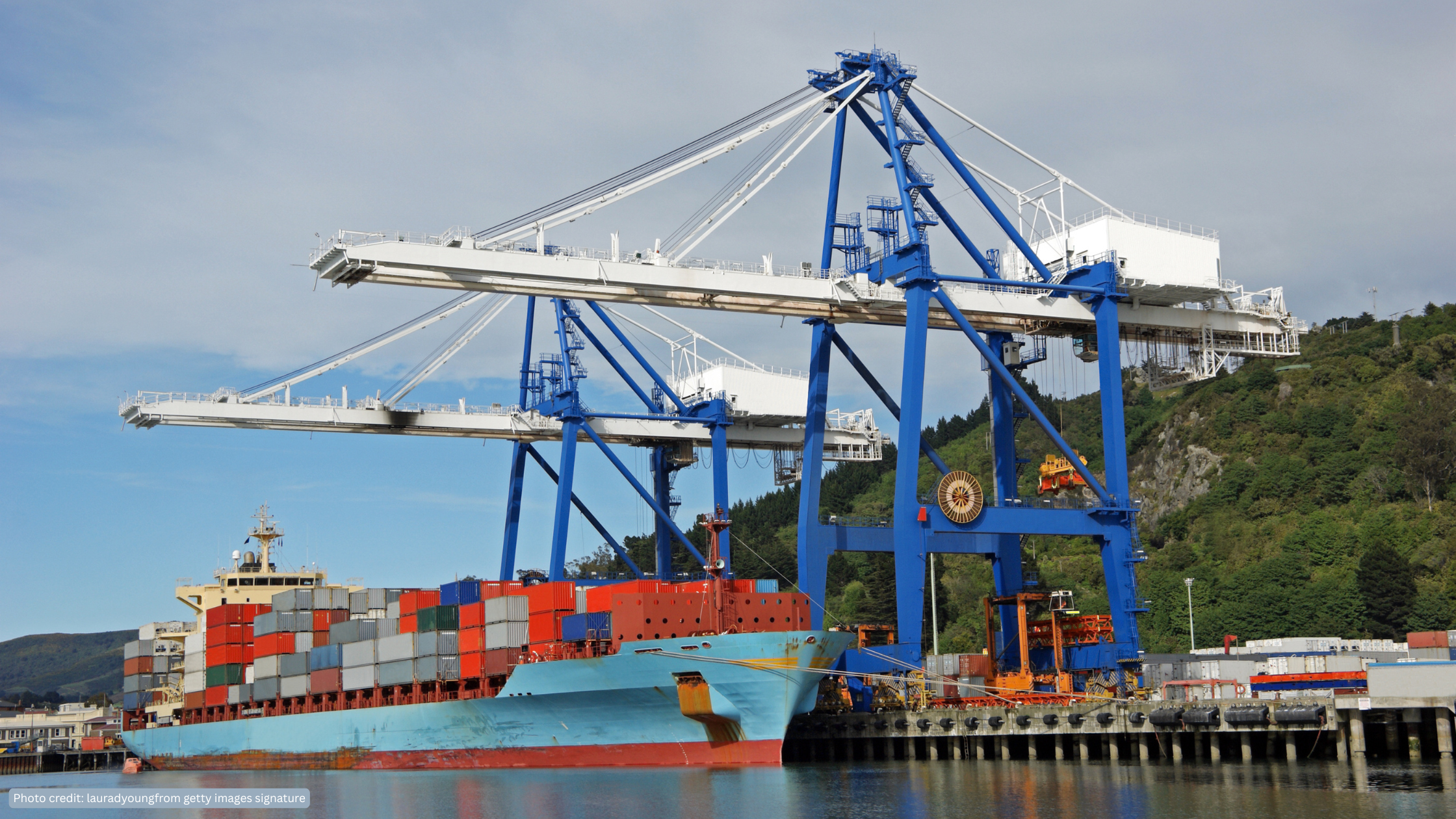
New Zealand’s growing food and fibre export sector is placing greater emphasis on how efficiently temperature-controlled goods can be stored, handled and transported.
The Ministry for Primary Industries’ June 2026 Situation and Outlook for Primary Industries forecast food and fibre export revenue of NZ$64.3 billion for the year to June 2026, rising to NZ$70.1 billion by 2030. The outlook points to continued demand for the infrastructure and logistics services that move agricultural products from producers and processors to international markets.
For cold-chain operators, however, export growth does not automatically translate into stronger margins. Refrigeration, transport, energy and handling all carry costs, while temperature-controlled facilities must maintain product integrity throughout storage and movement.
The challenge is to increase throughput and reliability without assuming that every increase in demand requires a corresponding expansion of physical capacity.
More volume brings operational pressure
Cold storage serves a wide range of products, from dairy, meat and seafood to fruit and other temperature-sensitive goods. Each category can have different storage conditions, handling requirements and seasonal patterns.
As volumes increase, operators must manage the timing of inbound product, available pallet positions, picking activity and outbound transport. A facility can have sufficient space on paper but still struggle if stock arrives in concentrated peaks, outbound collections are delayed or the available space is unsuitable for the product mix.
These pressures can affect more than warehouse utilisation. Congestion may slow vehicle turnaround, increase handling requirements and make it harder to maintain predictable dispatch schedules.
Exporters also need to coordinate cold storage with shipping schedules. When a vessel is delayed or a booking changes, goods may need to remain in storage longer than planned, tying up capacity that was intended for incoming product.
Efficiency matters alongside expansion
New Zealand’s cold-storage sector is already examining how to get more from existing facilities. In September, the New Zealand Cold Storage Association highlighted rising export forecasts and the importance of making better use of storage space, energy and handling capacity. The association also noted that refrigeration and transport are among the highest operating costs for cold-storage businesses.
This creates a case for reviewing operations before committing to new buildings or equipment.
Better inventory rotation, more accurate booking information and coordination between warehouse and transport schedules can help reduce avoidable congestion. Monitoring energy use and maintaining refrigeration equipment can also support more efficient operations, although improvements will depend on the age, design and workload of each facility.
Automation may help where repetitive handling tasks or high throughput justify the investment. But equipment choices need to reflect the temperature environment, product characteristics, available space and workforce capabilities. Technology that performs well in one facility may not be suitable for another.
Capacity is more than pallet positions
The ability to store goods is only one part of cold-chain capacity. Operators also need reliable refrigeration, sufficient labour, suitable loading areas, transport availability and processes for managing temperature excursions.
A shortage or failure in any of these areas can limit the volume a facility can handle safely and efficiently.
Businesses should therefore assess capacity across the whole operating process. That includes identifying peak periods, measuring vehicle turnaround and understanding how much flexibility exists when inbound volumes or shipping schedules change.
Contingency planning is equally important. Alternative storage arrangements, backup equipment and clear procedures for delayed shipments can help businesses respond when normal operations are interrupted.
Protecting product quality while controlling costs
For exporters, cold-chain performance affects product condition, delivery reliability and the value recovered from goods reaching overseas customers. The consequences of poor handling can extend beyond a single shipment, particularly when the goods are perishable or difficult to replace.
As export demand grows, New Zealand’s cold-chain challenge is therefore not simply whether more storage can be built. It is whether facilities, transport providers and exporters can coordinate capacity and use existing resources effectively.
Investing in additional infrastructure may be necessary in some locations. But better planning, energy management, handling processes and information-sharing can also help unlock capacity that is already available.
For supply chain leaders, the priority is to understand where the real constraint sits, such as storage space, refrigeration, labour, transport or coordination, before deciding how to address it.
Also read: Why cold chain capability is becoming a supply chain priority

Yvette is a Content Producer at Akolade, producing stories for Supply Chain Channel, an Australian learning ecosystem created to address the need for information, networking, case studies, and empowerment for everyone in the supply chain sector.