
Long supply lines, limited transport alternatives and the concentration of logistics capacity in southern Australia are creating vulnerabilities in the country’s ability to sustain operations across the north, according to a new report.
The Australian Strategic Policy Institute (ASPI) examines these challenges in its report, Closing the distance: Australia’s northern theatre logistics distribution gap, which assesses whether Australia’s existing infrastructure can move, replenish and sustain supplies across northern regions during periods of disruption.
ASPI finds that Australia continues to concentrate much of its industrial, warehousing, maintenance and storage capacity in the south and south-east, leaving critical northern ports, airfields and facilities thousands of kilometres from major support networks.
The report argues that strengthening northern logistics will require more than additional infrastructure. Australia also needs resilient distribution networks, forward stockholding and greater capacity to maintain and replenish supplies closer to where they are needed.
Limited transport options increase vulnerability
The report identifies the Adelaide–Darwin corridor as a particular logistics vulnerability.
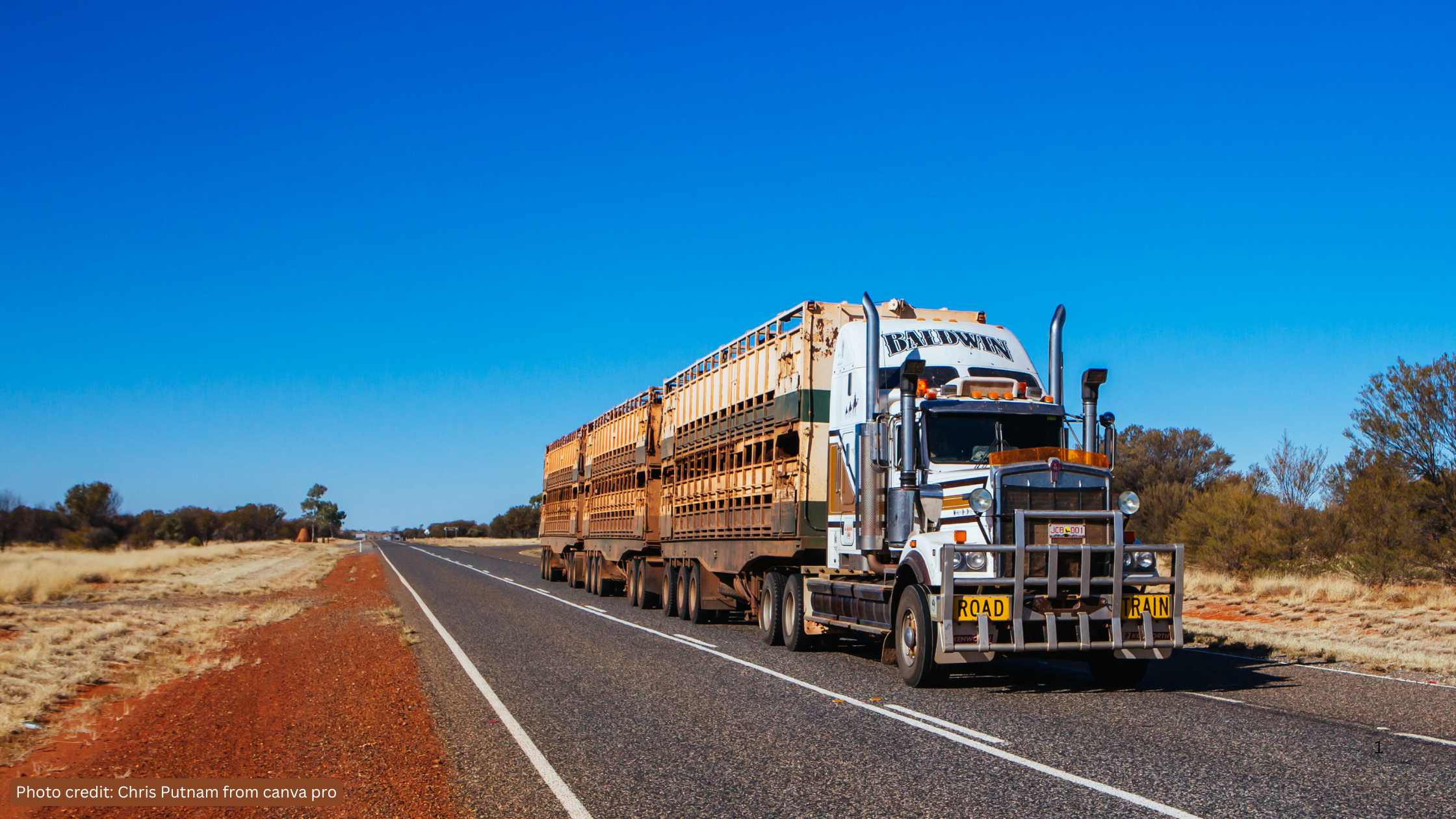
Freight moving along the corridor relies heavily on the Stuart Highway and a single-track railway. The rail connection carries approximately six scheduled freight services in each direction each week, limiting alternative capacity if disruption affects either mode.
The distances involved also make rapid replenishment difficult when transport networks come under pressure.
According to ASPI, the central challenge is therefore not simply whether Australia holds enough supplies. The country must also be able to distribute them at the speed and scale required.
Infrastructure Australia has similarly identified vulnerabilities across the Northern Territory’s freight network. Its infrastructure planning priorities note that six of Australia’s eight most vulnerable road freight corridors are located in the territory, where flooding, storms and extreme heat can disrupt access for communities and industries.
These vulnerabilities affect sectors including mining, agriculture, energy and gas, reinforcing the broader economic importance of reliable northern freight connections.
Industry highlights freight’s role in national resilience
The Australian Logistics Council (ALC) has also called for freight infrastructure to play a greater role in national resilience planning.
In its engagement with the Federal Government in 2026, the industry body highlighted freight rail and intermodal capability as national assets that can strengthen resilience while supporting more efficient freight movements.
The ALC has also argued that fuel security needs to be considered as a whole-of-system issue because defence, health, food, agriculture, emergency services and communities all depend on functioning freight and logistics networks.
The industry perspective reinforces ASPI’s argument that northern logistics cannot rely solely on individual infrastructure projects. Roads, rail, fuel supplies, warehouses, intermodal facilities and commercial transport capacity need to function as a connected system.
Logistics network relies on public and private capacity
Australia’s northern logistics network combines government infrastructure with capabilities provided by private industry.
Joint Logistics Command coordinates a national network covering warehousing, distribution, maintenance, fuel supply and logistics information systems. The system also relies on civilian infrastructure, transport operators, industry capabilities and the broader workforce.
Principal Joint Logistics Units operate at Moorebank, Bandiana, Townsville, Brisbane, Edinburgh and Darwin, with Toll Remote Logistics providing support under the Defence Theatre Logistics contract.
The involvement of commercial transport and logistics providers highlights the connection between Australia’s civilian freight capacity and its ability to maintain essential supply networks during periods of disruption.
ASPI argues that investment in warehouses, fuel farms and hardened facilities alone will not resolve the northern logistics gap.
Instead, Australia needs to combine physical infrastructure with reliable distribution capacity, resilient transport routes, forward stockholding and the ability to repair and replenish equipment closer to northern operations.
Billions committed to logistics infrastructure
The Federal Government’s 2026 Integrated Investment Program allocates between $14 billion and $21 billion to theatre logistics and health, alongside between $13 billion and $16 billion for northern bases.
The program also allocates between $26 billion and $36 billion to guided weapons and explosive ordnance, including additional storage capacity.
ASPI says these investments provide a foundation for strengthening northern logistics but argues that individual infrastructure projects need to function as part of an integrated network capable of continuing operations when disruptions occur.
Infrastructure Australia has also identified Northern Territory freight rail and logistics capacity improvements as an immediate priority for planning investment.
The Australian Government has committed $440 million in planned equity towards a network of regional logistics hubs along the Darwin–Tarcoola rail line. The proposed infrastructure aims to increase supply chain capacity and improve regional connections to the national transport network.
Northern Territory forms a critical logistics link
The report identifies the Northern Territory as a critical connection between Australia’s national support base and its northern operational network.
Its location places considerable importance on the road and rail infrastructure connecting Darwin with southern Australia, particularly when alternative transport options remain limited.
Improving resilience could therefore require greater redundancy across transport routes as well as more capacity to store, maintain and distribute supplies within northern Australia.
For the wider freight sector, the findings highlight a familiar supply chain challenge. Concentrating inventory, infrastructure and capabilities in a small number of locations can improve efficiency during normal operations but increase vulnerability when disruption affects the connections between them.
Moving beyond infrastructure alone
Australia’s northern logistics challenge ultimately centres on distribution.
New warehouses, storage facilities and other infrastructure can increase capacity, but their effectiveness depends on whether the wider transport network can continue moving goods when normal routes become constrained or unavailable.
ASPI argues that Australia must treat infrastructure, transport capacity, inventory and maintenance as interconnected parts of the same logistics system.
The findings align with wider industry calls for Australia to consider freight infrastructure as part of its national resilience capability rather than simply as a means of moving goods during normal operating conditions.
For supply chain operators, the report reinforces the importance of redundancy, geographic diversification and forward planning when building resilient networks across large distances.
As Australia invests further in its northern infrastructure, the ability to move and replenish supplies reliably could prove just as important as the amount of infrastructure the country builds.

Yvette is a Content Producer at Akolade, producing stories for Supply Chain Channel, an Australian learning ecosystem created to address the need for information, networking, case studies, and empowerment for everyone in the supply chain sector.