
Online retail spending is growing considerably faster than spending in physical stores in New Zealand, increasing pressure on retailers to integrate warehouses, stores, inventory and delivery networks rather than manage ecommerce and bricks-and-mortar as separate channels.
Online spending increased 12 per cent in the first half of 2026 compared with the same period last year, according to NZ Post data reported by 1News.
Spending in physical stores increased 2 per cent over the same period, while the average online basket reached NZ$120, more than double the NZ$54 average spent in-store.
The figures point to continued ecommerce growth, but from a supply chain perspective, the shift does not necessarily make physical stores redundant.
Instead, it changes how retailers use stores, where they position inventory and how orders move between distribution centres, shops and customers.
Ecommerce changes the fulfilment equation
Traditional retail supply chains largely moved products in one direction.
Suppliers delivered goods to distribution centres, which replenished stores based on forecast demand. Customers then travelled to those stores to make purchases.
Ecommerce changes the final stages of that model.
Instead of moving products primarily in bulk from distribution centres to stores, retailers may need to fulfil thousands of individual orders to separate addresses.
That creates different requirements for picking, packing, inventory management and transport.
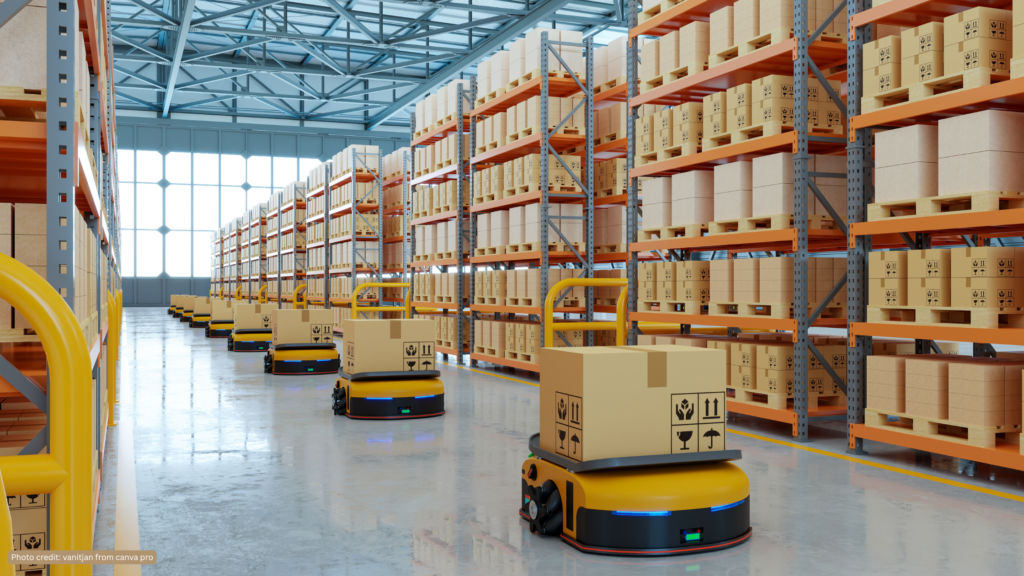
A warehouse designed primarily to replenish stores by pallet or carton may need different processes if it also handles individual ecommerce orders.
Online shopping can therefore shift logistics costs away from the shopfront without necessarily eliminating them. Fulfilment, packaging, technology, parcel delivery and returns become more significant parts of the cost equation.
Stores can become part of the fulfilment network
Physical stores can take on different roles as retailers combine online and in-store channels.
Inventory held in a shop does not necessarily need to be reserved for customers who walk through the door.
Retailers can use stores to fulfil online orders, provide Click & Collect services and accept ecommerce returns, effectively turning parts of their store networks into distributed fulfilment infrastructure.
For some orders, fulfilling from a nearby store can reduce the distance between inventory and the customer compared with dispatching every parcel from a central warehouse.
Stores can also provide convenient collection and return points while continuing to support product discovery and face-to-face customer service.
But expanding the supply chain role of stores also increases operational complexity.
Store employees may need to pick and prepare online orders alongside serving customers, while retailers need systems capable of deciding which location should fulfil each order.
Inventory visibility becomes critical
Integrated fulfilment only works if retailers know where their inventory is and whether it is actually available to sell.
An omnichannel retailer might hold the same product at a distribution centre and across multiple stores while offering all of that stock to online customers.
Without accurate inventory data, businesses risk selling products that are unavailable, holding excess stock in one location while another experiences shortages or dispatching an order from an unnecessarily distant facility.
Retailers therefore need to treat inventory as part of one network rather than maintaining separate pools for ecommerce and physical stores.
That requires coordination between warehouse management, point-of-sale, ecommerce and order management systems.
The objective is not simply to know how much inventory the business owns. Retailers also need to determine where stock should sit and which location can fulfil an order most effectively.
Convenience adds cost and complexity
The flexibility customers experience through ecommerce creates additional work behind the scenes.
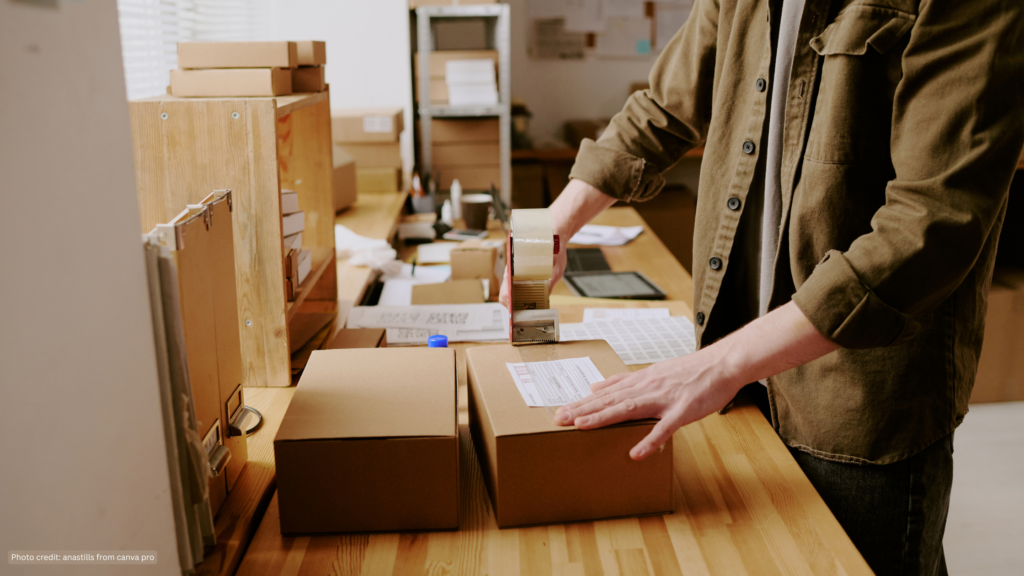
Individual products need to be picked and packed. Orders require packaging and labels. Parcel networks need to deliver to thousands of individual addresses rather than a smaller number of stores.
Failed deliveries and returns can add further movements.
Retailers therefore need to balance delivery speed and convenience against the cost of providing those services, particularly when customers expect low-cost or free shipping.
The larger average online basket reported in New Zealand may help spread fulfilment costs across greater order value, but profitability still depends on product margins and the cost of processing and delivering each order.
Using stores as part of the fulfilment network can create additional options, but it does not remove those costs. Instead, retailers need to determine which fulfilment location provides the right combination of inventory availability, transport cost and customer service.
Returns reconnect online and physical channels
Returns provide another example of why online and physical retail increasingly operate as one network.
Allowing customers to return online purchases to stores can make the process more convenient while providing retailers with another route for recovering inventory.
But receiving the product is only the beginning of the reverse logistics process.
Retailers need to determine whether returned goods can be restocked locally, transferred to another location, refurbished or sent elsewhere for processing.
That requires inventory systems and fulfilment processes capable of moving products in both directions across the network.
As ecommerce volumes increase, returns management becomes another reason retailers need visibility across stores, warehouses and transport operations.
Retail is becoming a network, not a channel
The gap between online and physical retail spending growth suggests New Zealand consumers are continuing to shift more spending towards ecommerce.
For supply chains, however, the result is not necessarily a choice between online and physical retail.
A customer can discover a product online and buy it in-store. An online order can be collected from a shop. Inventory sitting in a store can fulfil an ecommerce order, while a product purchased online can be returned through the physical network.
Each option connects systems, inventory and operations that were once managed more separately.
The supply chain challenge is therefore becoming less about deciding whether ecommerce or physical stores should dominate and more about making both operate as one fulfilment network.
For retailers operating across both channels, the question is increasingly not whether a physical store is still worthwhile, but what role each store should play within the wider fulfilment network.
Also read: Online vs in-store fulfilment and why retailers increasingly need both

Yvette is a Content Producer at Akolade, producing stories for Supply Chain Channel, an Australian learning ecosystem created to address the need for information, networking, case studies, and empowerment for everyone in the supply chain sector.