
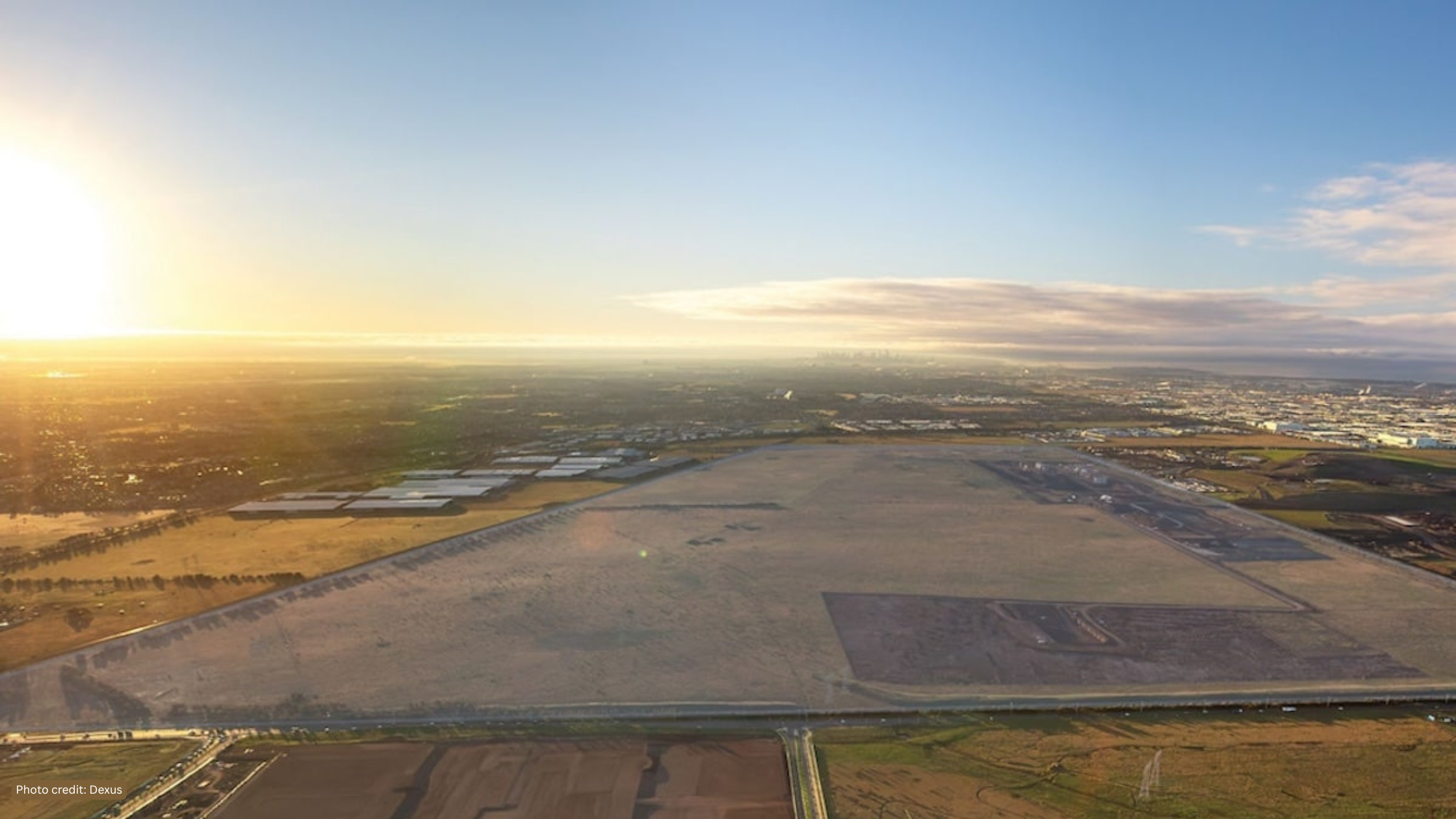
A proposed 630-hectare industrial precinct at Ravenhall could add approximately 2.5 million sqm of logistics and industrial space to Melbourne’s west, expanding long-term capacity within one of Victoria’s major freight corridors.
Located around 20 kilometres from Melbourne’s CBD, the site provides connections to the Western Ring Road, Port of Melbourne and Melbourne Airport.
It also sits near the proposed Outer Metropolitan Ring Road, a future transport corridor designed to connect Melbourne’s western and northern growth areas and provide another route for freight movements across the city’s outer suburbs.
The Ravenhall development will progressively transform land currently occupied by an active quarry into industrial and logistics uses over several decades.
Dexus and Boral are progressing the precinct through a joint venture, with development set to occur in stages as quarrying activities transition and land becomes available.
Staged development unlocks industrial land
The site’s transition from quarrying means developers will release industrial land progressively rather than build the entire precinct at once.
The staged approach would allow quarrying to continue on parts of the site while other areas move through rehabilitation and industrial development.
Dexus Executive General Manager, Industrial, Chris Mackenzie said the development would follow the progressive availability of land.
“We’re not trying to develop the 2.5 million sqm simultaneously,” Mackenzie said.
“Instead, we’re staging the activation carefully and in sequence, aligned with the progressive availability of land as quarrying activity transitions over time.”
The long development horizon could allow individual stages to respond to changes in industrial demand, freight infrastructure and warehouse requirements as the precinct evolves.
Freight connections underpin industrial potential
Ravenhall’s location places the proposed precinct close to several of Melbourne’s major freight and logistics networks.
The Western Ring Road connects Melbourne’s western industrial areas with major motorway corridors, while the Port of Melbourne provides access to international containerised and bulk freight.
Melbourne Airport and surrounding logistics areas provide another connection for businesses moving goods through domestic and international supply chains.
These transport links could support a range of uses across the Ravenhall precinct, including large-format distribution centres, fulfilment facilities, e-commerce operations and advanced manufacturing.
For logistics operators, proximity to major freight corridors can reduce indirect transport movements and improve access between warehouses, ports, airports and customers.
The precinct’s scale could also provide additional options for businesses requiring large warehouse footprints that can be difficult to accommodate in established industrial areas.
Industrial growth increases infrastructure demand
Developing approximately 2.5 million sqm of industrial space would also increase demand on surrounding transport and infrastructure networks.
Additional distribution centres and manufacturing facilities would generate more heavy-vehicle movements, making road capacity and connections with major freight corridors important considerations as development progresses.
Transport modelling and infrastructure planning will therefore play a role in determining how individual stages connect with the wider network.
The project’s long timeframe also means freight operations could change significantly during its development.
Warehouse automation, alternative-fuel vehicle fleets, changing delivery models and new freight technologies could influence the types of infrastructure future industrial users require.
Maintaining flexibility across individual stages could allow the precinct to respond to those changes as supply chain operations evolve.
Melbourne’s west remains a major logistics hub
Melbourne’s west accommodates a significant share of Victoria’s warehousing, distribution and manufacturing activity, supported by access to major road corridors and connections to the port and airport.
Ravenhall could add substantial industrial capacity to that existing network as individual sections of the site transition from quarrying.
The proposed development is expected to support around 3,000 jobs at peak construction and more than 31,000 direct, indirect and induced jobs during operations, according to project estimates.
The developers have also estimated that the precinct could contribute $14.9 billion to the Victorian economy over its development and operation.
The project’s scale is particularly relevant to the logistics property market because large, connected industrial sites become harder to assemble as cities expand and competing land uses increase.
Building long-term logistics capacity
For Melbourne’s supply chains, Ravenhall’s significance lies in both the amount of industrial space proposed and its position within the city’s western freight network.
An additional 2.5 million sqm could provide long-term capacity for distribution, fulfilment, manufacturing and other industrial operations while connecting businesses with major road, port and airport infrastructure.
The development will take shape progressively rather than deliver that capacity at once, with the timing of individual stages linked to the transition of existing quarry operations.
As that transition unfolds, Ravenhall could expand Melbourne’s western industrial footprint and provide additional logistics capacity as freight volumes, warehouse requirements and supply chain models evolve.

Yvette is a Content Producer at Akolade, producing stories for Supply Chain Channel, an Australian learning ecosystem created to address the need for information, networking, case studies, and empowerment for everyone in the supply chain sector.