
In Australian supply chains, disruption is no longer an occasional event. It is becoming part of the operating environment. Organisations are navigating geopolitical uncertainty, extreme weather, tariffs, freight disruption and shifting customer expectations, often at the same time. The result is a supply chain that is moving faster and becoming harder to manage, while many of the systems and processes underpinning it were designed for a more predictable world.
The Australian Industry Group (Ai Group) reported that 47% of Australian industrial businesses were experiencing active supply chain disruptions in August 2025, up from 35% in late 2024. More recently, a 2026 survey by Chartered Accountants Australia and New Zealand found that 49% of organisations and clients were experiencing supply chain disruption directly linked to the Middle East conflict, with higher production costs and shipping and freight delays among the consequences. These figures highlight a fundamental challenge: businesses need to become better at responding to disruption, not simply planning for it.
Traditional enterprise systems were largely built around systems of record, capturing transactions and providing visibility into what has already happened. But in an environment defined by continuous change, visibility alone is no longer enough. Businesses need systems of action that can turn signals into decisions and decisions into coordinated responses.
An adaptive supply chain
For years, supply chain resilience was largely about anticipating potential disruption and developing contingency plans. That remains important, but today’s disruptions are more complex and less predictable. Climate events can affect transport and infrastructure. Geopolitical tensions can alter trade routes and sourcing strategies. Tariffs can change the economics of moving goods across borders. Shortages can emerge unexpectedly, while customer expectations continue to demand speed and availability.
The cost of these pressures is already being felt. Recent BSI research found that 33% of Australian businesses planned to increase prices over the next six months to offset disruption-related costs, compared with a global average of 36%. This illustrates how supply chain disruption can quickly move beyond logistics and operations, affecting pricing, product availability and, ultimately, the customer experience.
Resilience therefore cannot simply mean having more inventory, more suppliers or more contingency plans. It increasingly means having the ability to sense what is changing, understand its potential impact and act quickly.
Australia is also investing in the physical foundations of greater supply chain resilience. The Australian Government has granted Major Project Status to four projects intended to strengthen supply chains across areas including critical minerals, renewable energy and solar manufacturing. These initiatives reflect the broader recognition that resilient supply chains are strategically important to Australia’s economic future.
But physical resilience is only part of the equation. Digital capabilities will be equally important in determining how quickly organisations can respond when conditions change.
From visibility to intelligent execution
This is where artificial intelligence can play a meaningful role. AI is not simply another technology layer to add to an existing supply chain. Used effectively, it can change how supply chain decisions are made and how quickly organisations can respond.
EY’s latest economic modelling estimates that AI could lift Australia’s multifactor productivity by between 2.0% and 2.4% by 2036. EY also estimates that AI could boost Australia’s GDP by between $95 billion and $116 billion over the next decade. The potential is significant, but realising that benefit will depend on more than adopting AI tools. Organisations will need to connect AI to the processes where decisions are made and actions are taken.
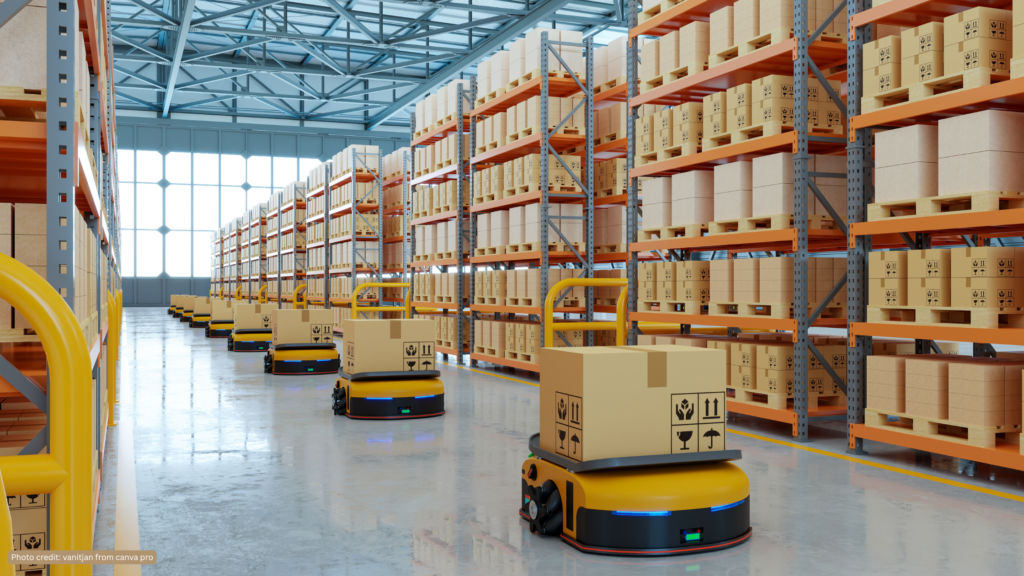
That means moving beyond isolated applications and disconnected workflows. A supply chain cannot become truly adaptive if its order, warehouse and transportation operations continue to operate independently, with people spending valuable time reconciling information between systems.
Intelligent Supply Chain Execution takes a different approach. It connects orders, warehouse operations and transportation so that information can move across the supply chain and inform coordinated action.
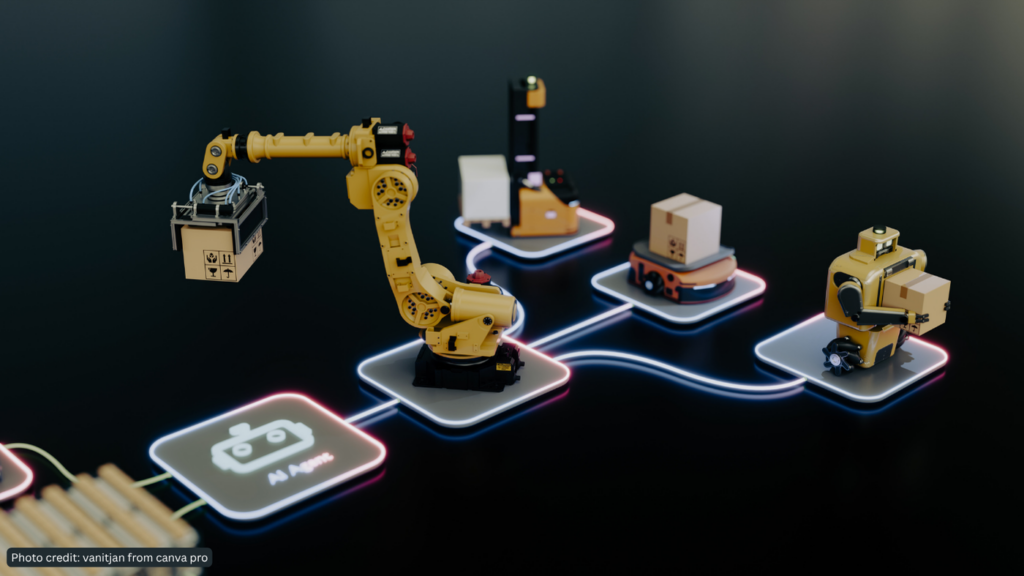
This can combine several forms of AI. Predictive AI can identify potential disruption before it affects operations. Generative AI can bring together fragmented information and provide context around what is happening. Agentic AI can help determine and execute appropriate actions across connected workflows, while conversational AI can make complex information more accessible to operators and decision-makers.
The objective is not AI for its own sake. It is faster, more informed execution. That distinction matters. A supply chain may have excellent data and sophisticated analytics, but if an operator still has to manually interpret the information, move between systems, contact multiple teams and coordinate a response, much of the potential value remains unrealised.
The next generation of supply chain technology must therefore close the gap between insight and action.
Building resilience through controlled autonomy
This does not mean removing people from the decision-making process. In fact, the most effective approach is likely to combine machine speed with human judgement.
Autonomy should be earned, not assumed. AI-enabled systems can begin by identifying issues, recommending actions and explaining the rationale behind those recommendations. As organisations build confidence in the technology, they can allow more decisions and workflows to be executed automatically within clearly defined parameters.
This creates a continuous operational loop: sense, decide, act and learn.
Consider a delayed shipment. In a traditional environment, an operator may need to identify the delay, determine which orders are affected, assess inventory and customer commitments, contact the carrier and then decide how to respond. In a more intelligent execution model, these steps can be connected. A system can identify the disruption, assess its downstream impact, recommend alternatives and coordinate the appropriate response across transportation, warehouse and order workflows.
The benefit is not simply faster information. It is faster recovery. That distinction is increasingly important because disruption rarely stays in one place. A delayed inbound shipment can affect inventory availability. That can affect warehouse priorities, which can affect outbound transportation and, ultimately, the customer.
The ability to coordinate a response across these connected processes is what turns resilience from a planning exercise into an operational capability.
The path to resilience
The pressure to build that capability is growing as AI adoption accelerates globally. The AI Diffusion Report 2025, published by Microsoft’s AI Economy Institute, found that generative AI adoption reached 16.3% of the world’s population in the second half of 2025, up from 15.1% in the first half of the year.
For supply chain leaders, the question is no longer whether AI will influence operations. It is how effectively organisations can embed it into the workflows that matter most.
The opportunity is particularly compelling in supply chain execution because the environment is inherently dynamic. Orders change. Inventory moves. Vehicles are delayed. Capacity fluctuates. Customer expectations shift. Weather and geopolitical events can alter plans with little warning.
Static systems struggle in this environment because they are designed to support processes that follow a predefined sequence. Adaptive systems are designed to respond when that sequence breaks down.
This is why modularity also matters. Organisations should not have to replace everything to become more intelligent. They need the flexibility to introduce new capabilities where they can deliver value, connect them to existing systems and evolve their operating model as requirements change.
Maintaining supply chain stability
As supply chains become more interconnected, resilience will increasingly depend on the ability to act at speed. Visibility remains essential, but it is no longer the destination. Knowing that a disruption is occurring is only valuable if an organisation can understand what it means and respond effectively.
The businesses that thrive in this environment will be those that build intelligence directly into their operational workflows. They will use technology to reduce manual intervention, connect previously fragmented processes and give people the context they need to make better decisions.
Most importantly, they will move from reacting to disruption towards continuously adapting to it.
That is the new standard for supply chain resilience: not simply recovering when something goes wrong, but creating an operating model capable of responding to change without bringing execution to a halt.
Intelligent Supply Chain Execution provides the foundation for that shift, connecting the intelligence, people and processes needed to sense change, make better decisions and act at speed. In a world where disruption is becoming constant, the ability to execute intelligently and continuously may be the most valuable competitive advantage of all.
Read more: How today’s supply chains are getting smarter, faster and leaner with AI

Darren O'Connor
Darren O'Connor is Director of Solution Delivery at Infios, helping organisations improve supply chain performance through connected execution, digital transformation and intelligent technology solutions.