

For supply chain operators, sustainability rarely exists as a standalone objective.
Businesses still need to move products on time, maintain inventory availability, control costs and meet customer expectations. At the same time, pressure to reduce emissions, waste and resource consumption continues to influence how companies design their supply chains.
These priorities can sometimes pull in different directions.
Faster delivery can require more transport movements. Additional inventory can strengthen resilience but increase storage requirements. Alternative packaging may reduce waste but cost more. Lower-emission transport options may not provide the same speed, capacity or network coverage as established modes.
The challenge is therefore not simply choosing sustainability over cost and convenience.
It is determining where supply chains can reduce their environmental impact without undermining the operational and commercial requirements that keep goods moving.
Why convenience can carry a supply chain cost
Convenience has become deeply embedded in modern supply chains.
Consumers and businesses increasingly expect products to be available when required, supported by fast delivery, broad product ranges and flexible fulfilment options.
Meeting those expectations requires infrastructure.
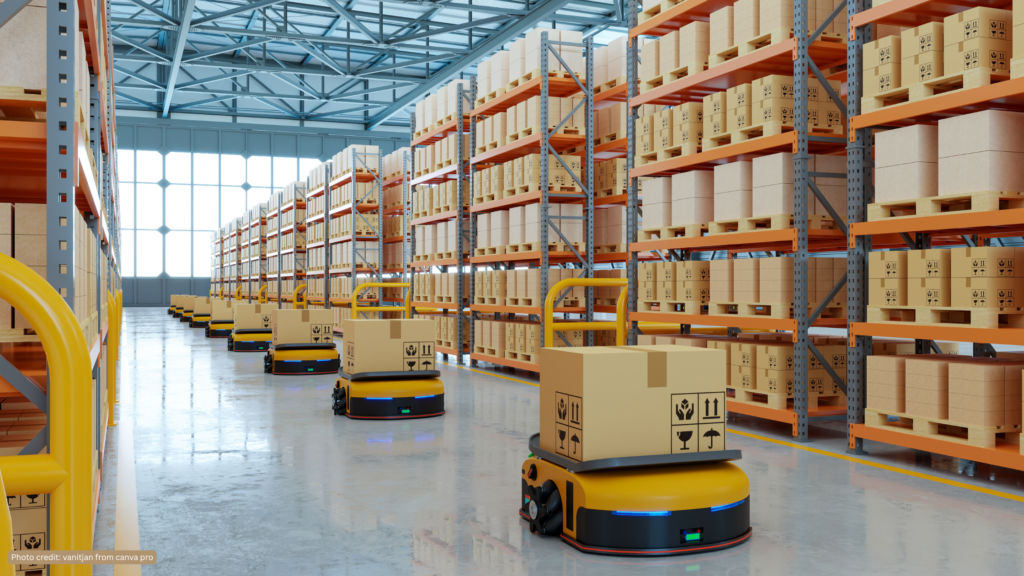
Warehouses hold inventory closer to customers. Trucks make deliveries across increasingly complex networks. Distribution centres process smaller and more frequent orders, while retailers and logistics providers maintain capacity to respond to changing demand.
These systems can improve service, but they may also increase energy use, packaging and transport activity.
A faster delivery promise, for example, can reduce the opportunity to consolidate orders into fewer vehicle movements.
The environmental impact therefore depends not only on how far a product travels, but also on how efficiently the entire fulfilment network operates.
Cost remains a commercial reality
Sustainability initiatives ultimately operate within business economics.
Companies may be willing to invest in lower-emission vehicles, renewable energy, reusable packaging or more efficient facilities, but those investments still compete for capital with other operational priorities.
Some measures require substantial upfront expenditure even when they can reduce costs over time.
Warehouse solar systems, energy-efficient equipment and transport technologies can involve significant initial investment. Alternative fuels may require new vehicles or refuelling infrastructure. Changing packaging can affect procurement, warehouse processes and transport utilisation.
Businesses therefore need to consider both the immediate cost and the longer-term operational impact.
The cheapest option at the point of purchase is not necessarily the lowest-cost option across the life of a supply chain.
Efficiency can align cost and sustainability
The relationship between sustainability and cost is not always a trade-off.
Many supply chain improvements can support both.
Increasing vehicle utilisation can reduce the number of trips required to move the same amount of freight. Better route planning can reduce unnecessary kilometres. Improving warehouse energy efficiency can lower electricity consumption and operating costs.
Packaging optimisation can reduce material use while allowing more products to fit into cartons, pallets, trucks and containers.
Reducing product damage can also lower the environmental and financial costs associated with replacement goods, returns and additional transport.
These measures have something in common: they reduce waste within the supply chain.
In these cases, sustainability becomes less about accepting a higher cost and more about improving how resources are used.
Transport presents harder choices
Freight transport illustrates where the balance becomes more complicated.
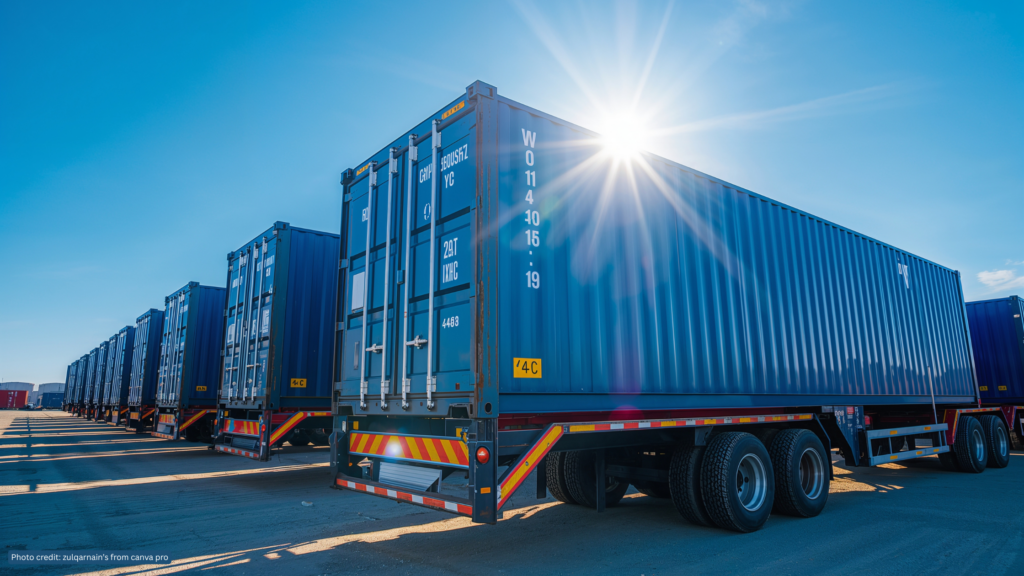
Road transport provides flexibility, extensive network coverage and direct connections between businesses. Rail can move large freight volumes efficiently over suitable corridors, while coastal shipping can provide another option for some long-distance movements.
The most sustainable mode will not necessarily be the most practical for every shipment.
Transit time, volume, origin and destination, terminal access, reliability and first- and last-mile requirements all influence the decision.
A business moving time-sensitive goods may have fewer options than one transporting non-perishable products between major freight hubs.
This makes modal choice less about identifying a universally preferable transport option and more about matching the mode to the freight task.
Inventory creates another balancing act
Inventory strategy creates similar trade-offs.
Holding additional stock can strengthen resilience and help businesses maintain product availability during disruption.
However, more inventory requires warehouse space, capital and energy. Products may also become obsolete or expire before they are sold.
Keeping inventory extremely lean reduces some of those costs but can leave businesses more exposed when suppliers or transport networks experience disruption.
Sustainability adds another layer.
A supply chain designed around frequent small replenishment orders may reduce inventory holdings while increasing transport activity. Consolidating shipments can improve freight efficiency but requires businesses to hold more stock.
There is no single inventory model that optimises every objective.
The appropriate balance depends on the product, customer requirements and level of supply chain risk.
Customers influence the equation
Businesses do not make these decisions independently of customer behaviour.
Delivery expectations influence fulfilment models, while demand for lower prices can limit how much additional cost companies can pass through.
At the same time, customers increasingly encounter choices involving delivery speed, packaging and returns.
This creates opportunities to design convenience differently.
Giving customers the option to consolidate deliveries, choose slower delivery windows or use collection points can provide logistics operators with greater flexibility to improve vehicle utilisation.
But sustainable alternatives need to remain practical.
If a lower-impact option creates significantly more inconvenience or cost, customers and businesses may be less likely to adopt it consistently.
Technology can reduce some trade-offs
Better information can help supply chains find areas where sustainability, cost and service align.
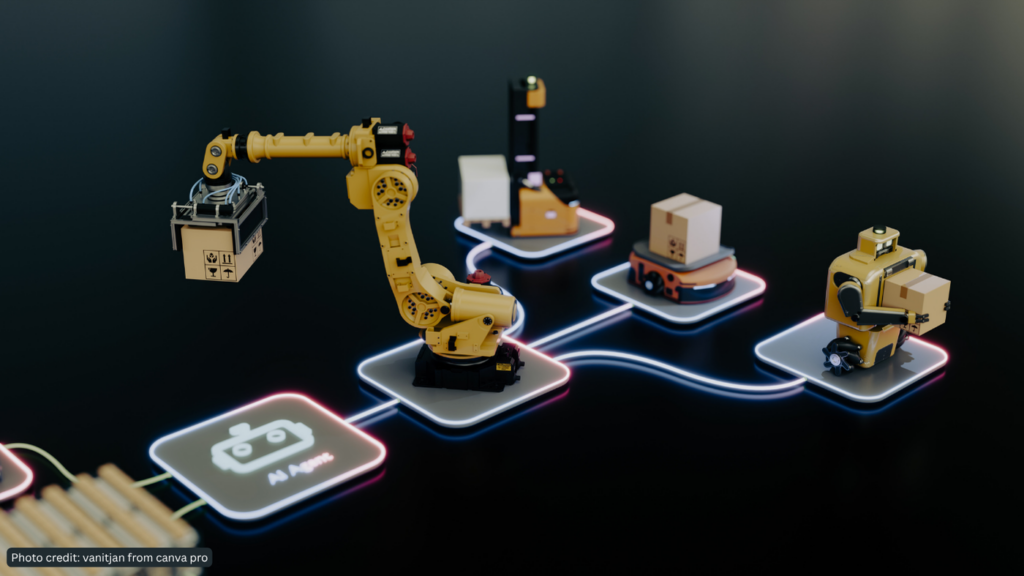
Transport management systems can improve routing and load utilisation. Warehouse systems can reduce unnecessary movements and improve inventory placement.
Demand forecasting can help businesses position stock more effectively, potentially reducing emergency shipments and excess inventory.
Data can also help companies understand where emissions occur across their supply chains and identify which interventions could produce the greatest improvement.
Technology does not remove the underlying trade-offs, but it can make them more visible.
That allows businesses to focus investment on areas where environmental improvements also produce operational benefits.
Moving beyond the either-or debate
Sustainable supply chains will still need to be commercially viable and convenient enough to meet customer requirements.
That means the transition is unlikely to involve choosing sustainability regardless of cost or abandoning service levels in pursuit of lower emissions.
Instead, businesses can examine individual decisions across procurement, transport, inventory, warehousing and fulfilment.
Some will involve genuine trade-offs. Others will reveal inefficiencies where reducing environmental impact also lowers costs or improves operations.
The goal is not necessarily to eliminate every compromise.
It is to understand where those compromises exist and avoid assuming that sustainability, cost and convenience must always compete.
For supply chain operators, the strongest opportunities may be the ones where using fewer resources, eliminating unnecessary movements and reducing waste simultaneously improve environmental and commercial performance.
Also read: Ways to embrace proactive sustainability in supply chains

Yvette is a Content Producer at Akolade, producing stories for Supply Chain Channel, an Australian learning ecosystem created to address the need for information, networking, case studies, and empowerment for everyone in the supply chain sector.