
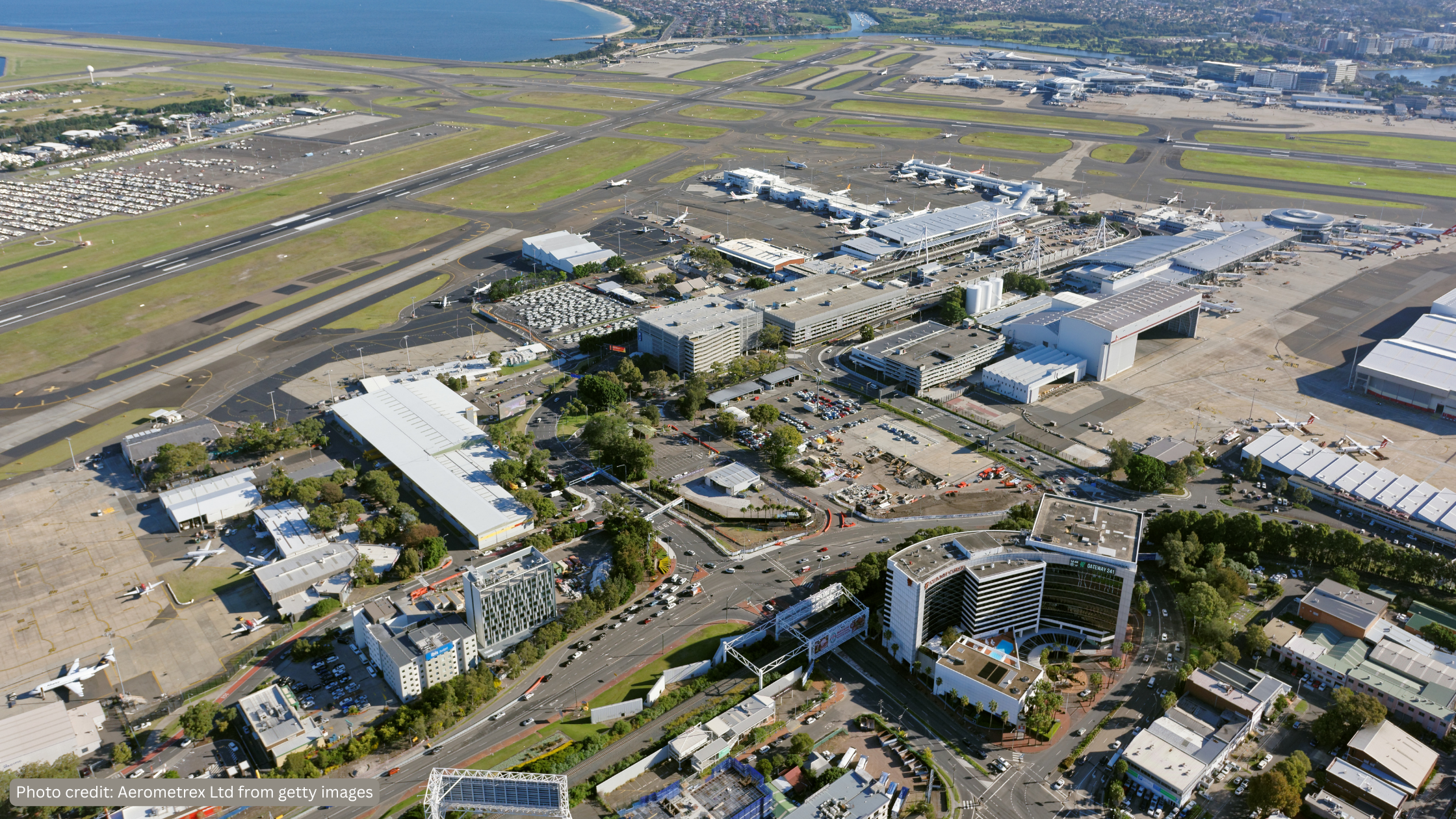
Sydney Airport is planning a major expansion of its freight-handling facilities as air cargo volumes are forecast to more than double over the next two decades under the airport’s newly approved Master Plan 2045.
Sydney Airport Corporation Limited (SACL) expects annual freight volumes at Kingsford Smith Airport to increase from approximately 600,000 tonnes in 2024 to 1.4 million tonnes by 2045, representing a 133% increase.
The expansion will increase the airport’s freight-handling capacity, with a particular focus on improving the timely retrieval of cargo carried in the holds of passenger aircraft.
Belly-hold cargo is expected to account for as much as 80% of Sydney Airport’s future freight volumes, making efficient connections between aircraft, cargo facilities and the wider road freight network increasingly important.
Freight infrastructure to support future growth
The freight upgrades form part of Sydney Airport’s broader 20-year development strategy, which also includes the expansion of the international T1 terminal and redevelopment of the T2 and T3 domestic terminals.
Sydney Airport expects total passenger movements to reach 72.6 million annually by 2045, with international passenger movements forecast to increase by 123% and domestic and regional movements by 44% compared with 2024 levels.
The airport says its airfield upgrades will create additional capacity for airfreight while improving the efficiency of freight processing and reducing disruption to passenger operations. New and expanded freight facilities are planned across several areas of the airport.
The Australian Government said the approved plan will help maintain Sydney’s connections with airports across Australia and internationally while supporting trade, tourism and economic activity.
Industry calls for freight-first planning
The freight industry’s response to the airport’s expansion has also focused on the infrastructure needed to support the growing cargo task.
In a submission to Sydney Airport’s draft Master Plan in December 2025, the Freight & Trade Alliance (FTA) and Australian Peak Shippers Association (APSA) called for freight considerations to remain a core element of the airport’s long-term planning.
The groups recommended a long-term roadmap covering freight precincts, warehousing, cold-chain capacity, automation, digital integration and inspection capabilities. They also called for stronger road connectivity and protection of nearby land used for logistics and freight operations.
FTA and APSA said Sydney Airport’s role in Australia’s trade network means future planning needs to account for operational capacity and the broader logistics network surrounding the airport.
Their recommendations also included workforce development, scalable inspection and clearance systems, cargo-specific sustainability measures and performance benchmarks for airfreight operations.
Managing growth across the transport network
With freight volumes expected to increase alongside passenger demand, SACL has been asked to work with Transport for NSW and neighbouring councils to manage the impact of airport growth on surrounding roads and infrastructure.
Future construction activities will also need to minimise disruption to existing road, rail and airport operations.
The focus on road connectivity is significant for airfreight operators, as cargo moving through Sydney Airport depends on efficient links between airport facilities, freight forwarders, warehouses, distribution centres and other transport hubs.
Sydney Airport has previously highlighted its proximity to Port Botany and its connections to Sydney’s motorway network as key advantages for freight and logistics businesses.
Sydney’s changing airfreight landscape
The expansion comes as Sydney’s aviation and freight network prepares for the opening of Western Sydney International Airport, which will add another major cargo gateway to the region.
Sydney Airport’s Master Plan forecasts a short-term reduction in some freight volumes following the opening of Western Sydney International, before growth resumes and reaches the 1.4 million-tonne forecast by 2045.
The two airports are therefore expected to play complementary roles in Sydney’s future airfreight network, with connectivity between airports and surrounding logistics infrastructure becoming increasingly important.
For Australia’s supply chain sector, Sydney Airport’s expansion signals continued growth in airfreight capacity, but also highlights the need for coordinated investment across cargo handling, road connectivity, warehousing and other supporting logistics infrastructure as demand increases.

Yvette is a Content Producer at Akolade, producing stories for Supply Chain Channel, an Australian learning ecosystem created to address the need for information, networking, case studies, and empowerment for everyone in the supply chain sector.