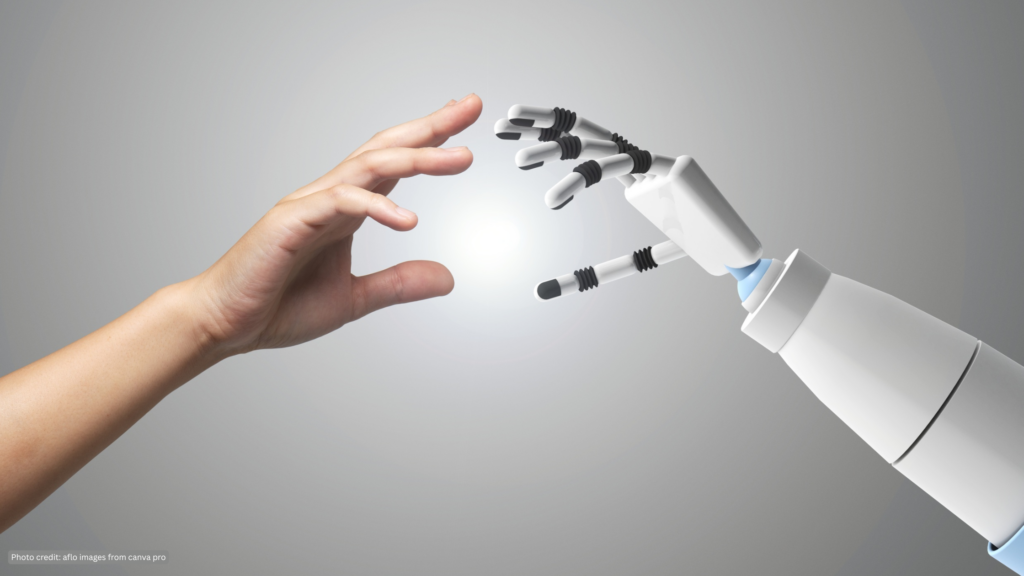

The goal is not to keep humans in every loop. It is to put human judgment where consequence and ambiguity are highest.
Supply chain leaders are going to hear some version of the same advice repeatedly over the next few years: adopt AI, but keep a human in the loop.
It sounds responsible.
It is also incomplete.
A human approval step does not automatically make an AI-enabled decision better, safer or more accountable. In many operating environments, it can simply create a new bottleneck: the machine does the analysis, frames the recommendation and prepares the action, while a person is left clicking “approve” at the end.
That is not necessarily human judgment.
Sometimes it is human ceremony.
The better question for supply chain leaders is not whether humans or AI should make the decision. It is: where does human judgment actually create value?
Supply chains are full of decisions that look similar in a workflow but are fundamentally different in consequence. An AI system can flag a late supplier, recommend an alternate source, calculate the commercial impact of switching and draft the communication. Those actions may happen inside one process, but they do not carry the same authority.
Recommending an alternate supplier is different from awarding the business. Moving inventory within a network is different from changing a customer commitment. Identifying a quality risk is different from deciding whether material can ship.
The technology may be capable of all of them.
That does not mean the organisation should delegate all of them the same way.
Human judgment is the scarce resource
This distinction is central to my doctoral research on what I call the Autonomy Portfolio View. The core idea is straightforward: AI capability is not the same thing as organisational authority.
Firms will not become “autonomous” in one clean step. They will develop a portfolio of decisions in which AI holds different levels of authority depending on the decision, the consequence of being wrong, how reversible the action is, how much ambiguity exists and how easily the organisation can intervene.
That is a more useful way to think about the human-AI balance.
Routine, high-volume and reversible decisions are obvious candidates for greater machine authority. Supply chain professionals should not spend their day manually validating decisions that fall comfortably within known parameters simply so the process can claim to have a human involved.
Human attention should move in the opposite direction: towards exceptions, ambiguity, trade-offs and consequences.
A planner creates more value deciding what to do when capacity, customer priority and supplier constraints collide than approving hundreds of routine replenishment recommendations. A buyer creates more value resolving an unexpected supplier failure than checking every clean purchase-order exception.
This is where I think the “human versus AI” debate gets supply chain wrong.
The best operating model is not human-led everywhere.
It is not AI-led everywhere.
It is deliberately uneven.
Being in the loop is not the same as being in control
The U.S. National Institute of Standards and Technology makes an important distinction here. In its AI Risk Management Framework, NIST says human roles and responsibilities in AI decision-making and oversight should be “clearly defined and differentiated.” It also notes that human-AI configurations can range from fully manual decision-making to fully autonomous systems, depending on the use case and required level of oversight.
The implication for supply chain is significant: oversight should be designed around the decision, not added generically to every workflow.
A person who receives a fully constructed recommendation, lacks the information to reconstruct it and approves it because there are 200 more waiting is technically in the loop.
But are they really in control?
NIST raises essentially the same question. Its framework considers the degree to which humans are actually empowered and incentivised to challenge AI output. The framework’s GOVERN function also calls for organisations to define roles and responsibilities for human-AI configurations and AI oversight.
That distinction will matter more as AI moves from analysing supply chain conditions to initiating actions in response to them.
Supply chain leaders should therefore know what AI may recommend, what it may initiate, what it may execute, when it must escalate and who can override it.
More importantly, they should decide where scarce human judgment is worth spending.
More AI makes human judgment more important
AI is going to make analysis cheaper and more abundant. It will surface more signals, generate more recommendations and increasingly act on them.
That makes human judgment more valuable, not less.
But only if we stop wasting it.
The future of supply chain work is not about keeping a person inside every loop. It is about redesigning the loops so people are concentrated where context, accountability and consequence matter most, while machines carry more of the routine volume underneath them.
The goal should not simply be to automate more work.
It should be to make better decisions faster, without confusing human presence with human control.
The views and opinions expressed in this article are those of the author and do not necessarily reflect the views of Supply Chain Channel.

Paul Malott
Paul Malott is the CEO of Automations24 and a doctoral candidate at the University of Michigan-Flint. He has more than 15 years of experience across procurement, supply chain, operations and enterprise transformation. His current work focuses on AI-native operating models, decision architecture and the evolving division of decision-making between humans and artificial intelligence. Through his research and consulting work, Paul explores how organisations can apply AI to improve operational performance while preserving appropriate human judgment, accountability and control.