

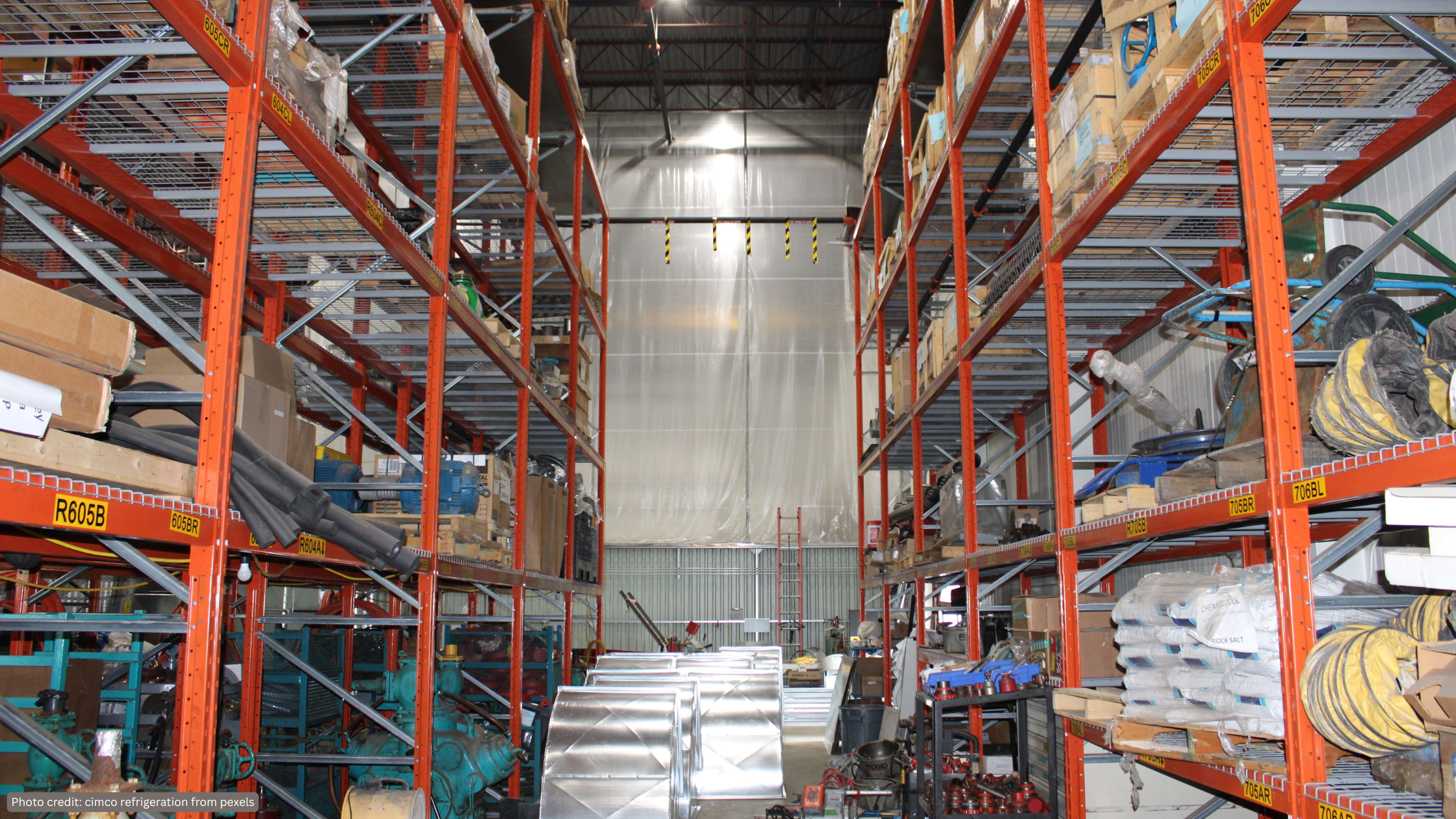
Inventory decisions are often measured by how much stock a business holds. But the total quantity on hand tells only part of the story. Products can be available across a network while remaining too far away, too expensive to move or poorly positioned to meet demand.
For Australian and New Zealand businesses operating across geographically dispersed markets, inventory placement can be just as important as inventory levels.
A distributor might hold sufficient stock nationally but still struggle to fulfil orders in a regional market. A retailer might have excess inventory in one distribution centre while another location repeatedly runs short. In both cases, the issue is not necessarily how much stock the business owns. It is where that stock sits.
More locations create more inventory decisions
Businesses use multiple warehouses and distribution centres to bring products closer to customers, support regional operations and reduce delivery times. However, spreading inventory across more locations also creates additional planning requirements.
Each facility needs enough stock to meet local demand, but duplicating inventory everywhere can increase holding costs and tie up working capital.
The challenge becomes more complicated when demand varies by location. A product that sells quickly in one city may move slowly in another. Seasonal patterns, customer preferences and differences in replenishment times can all influence how much stock each facility needs.
Holding the same quantity at every location is therefore unlikely to be the most effective approach.
Local availability has a network-wide cost
Positioning inventory closer to customers can improve responsiveness, but it can also create trade-offs.
More decentralised stock may require additional storage space, handling and replenishment movements. If demand shifts unexpectedly, a business may have excess inventory in one location and shortages elsewhere.
Transferring stock between facilities can help, but the decision depends on transport costs, delivery commitments and the likely demand at both locations. Moving stock to solve one shortage can create another if the sending facility needs that inventory soon afterwards.
Australian businesses face particular considerations because of the distances between major population centres and regional markets. New Zealand businesses must also consider inter-island freight and the time required to move stock between locations.
The cheapest option is not always to hold stock closer to every customer. Nor is it necessarily to centralise everything in one facility.
The objective is to understand where additional inventory provides enough service or risk-reduction value to justify its cost.
Different products need different placement strategies
Inventory placement should reflect the characteristics of individual products rather than rely on a single rule for the entire range.
Fast-moving products with consistent local demand may justify positioning closer to customers. Expensive, slow-moving products may be better held centrally, particularly when they can be delivered within an acceptable timeframe.
Critical spare parts present a different consideration. A component may sell infrequently but be essential to restoring equipment or maintaining production. Its operational importance may justify holding it near the site where it is needed.
Businesses can assess products using factors such as demand variability, replenishment lead time, value, delivery requirements and the consequences of a stockout.
This helps determine which items should be distributed across the network, which can remain centralised and which may need dedicated buffers at specific sites.
Inventory placement needs regular review
A network designed around historical demand can become inefficient as customer locations, sales patterns and transport conditions change.
Businesses should regularly compare inventory positions with actual demand and service performance. Repeated transfers, local shortages alongside network-wide excess and high levels of slow-moving stock can indicate that inventory is not positioned effectively.
Planning should also account for replenishment constraints. A central warehouse may appear efficient until a transport disruption or supplier delay prevents it from serving several markets at once.
That does not automatically mean every location needs more stock. It may instead point to a need for alternative replenishment routes, revised allocation rules or clearer priorities for constrained inventory.
The measure of success is more than stock levels
Inventory placement connects customer service, transport, warehousing and working capital. Treating it as a storage decision alone can obscure the costs that emerge elsewhere in the network.
For supply chain leaders, the question is not simply how much inventory the business holds. It is whether that inventory is positioned to meet demand reliably and economically.
The right stock in the wrong location can still leave customers waiting and operations exposed. Better placement helps businesses make the most of inventory they already own before committing more capital to additional stock.
Also read: Critical inventory needs a different strategy from everyday stock

Yvette is a Content Producer at Akolade, producing stories for Supply Chain Channel, an Australian learning ecosystem created to address the need for information, networking, case studies, and empowerment for everyone in the supply chain sector.