

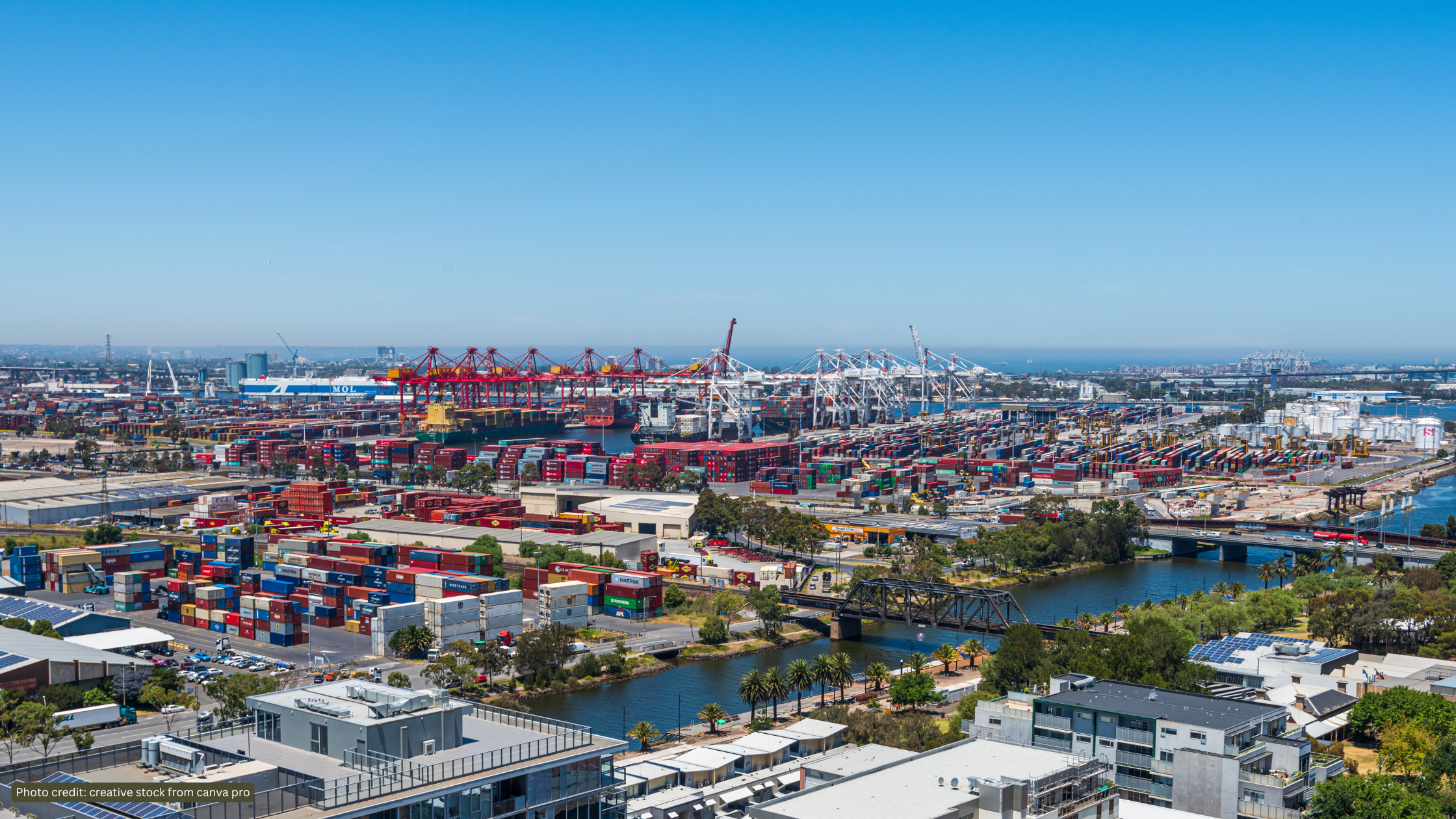
Victoria’s container freight task has grown almost 15 per cent since 2019. New data shows that future growth will put pressure not only on the Port of Melbourne, but also on the wider network that moves containers to and from businesses across the state.
The Victorian Government’s latest Container Logistics Chain Study found that 3.4 million twenty-foot equivalent units (TEU) moved through the Port of Melbourne in 2024, up from 2.96 million in 2019. That represents a 14.7 per cent increase.
The study also found that almost 70 per cent of import containers were collected within two days of becoming available. The average collection time was 36 hours.
But the destination of those containers matters as much as the volume moving through the port.
More than 40 per cent of metropolitan import containers are destined for major logistics areas in Melbourne’s west, including Laverton, Truganina and Derrimut.
That concentration highlights a broader supply chain challenge. As container volumes increase, Victoria also needs enough capacity across its roads, rail lines, industrial precincts, warehouses and intermodal terminals.
The freight network does not end at the port gate
Port throughput captures only part of the freight journey.
Imported goods must travel from the port to warehouses, distribution centres and other destinations. Export containers make the reverse journey, moving from farms, manufacturers, processors and packing facilities to the port.
The refreshed study tracks these inland movements, including where imported goods go and where export containers originate across Victoria. It also establishes a repeatable way to track changes in container flows over time.
That makes the location of freight activity increasingly important.
Melbourne’s west has become a major logistics concentration, bringing warehouses, distribution facilities, transport operators and freight routes close together. This can help operators place freight near major transport connections and distribution markets.
However, concentration can also increase pressure on the surrounding network. Road congestion, limited industrial land or weak connections between transport modes can constrain the movement of goods as volumes grow.
Capacity needs to follow the freight
The Australian Logistics Council has said the value of the new data will depend on how it informs decisions about freight corridors, rail, intermodal capacity and industrial land.
ALC CEO Dr Hermione Parsons has also stressed the need for Victoria to plan for the freight task it will face over the next 10 to 20 years, rather than simply respond to existing constraints.
That longer-term view matters because freight infrastructure takes years to plan and develop.
A warehouse may meet current demand, but its road and rail connections also need to support future freight volumes. An intermodal terminal can add capacity, but only if it connects effectively with the port, distribution centres and the wider freight network.
Victoria is planning additional intermodal capacity in locations including Somerton, Altona, South Dandenong and Truganina. The state is also pursuing the Port Rail Shuttle Network to connect metropolitan freight terminals with the Port of Melbourne.
The goal is not simply to replace trucks with trains. Road freight will remain essential for first- and last-mile movements, particularly where businesses lack direct rail access.
The bigger challenge is to connect the different modes effectively.
Export supply chains add another layer
The container network also supports Victoria’s export industries.
Food and livestock accounted for more than 25 per cent of the state’s export container volumes in 2024, making them the largest export category by container volume.
For these supply chains, freight can pass through several stages before reaching the port, from production and processing to packing, transport and shipping.
A capacity constraint at one point can therefore affect the wider movement of goods. For time-sensitive products, delays can create consequences beyond transport costs, particularly when freight must meet shipping schedules or maintain product quality.
This makes it difficult to view container infrastructure in isolation from the industrial areas and transport networks that feed it.
Planning needs to follow the freight
Victoria’s latest study provides a clearer picture of how containers move through the state. The bigger question is how the data will shape future capacity decisions.
The government says the refreshed study will support infrastructure investment, transport and land-use planning, and policy decisions as the freight task changes.
For supply chain operators, that information can help identify where future bottlenecks could emerge — whether at the port, on connecting roads, around intermodal terminals or in the industrial areas where businesses unpack containers.
The growth in container volumes therefore points to a wider issue than port capacity alone.
As Victoria’s freight task expands, supply chain reliability will depend increasingly on how well the different parts of the network work together.
The question is not simply whether the Port of Melbourne can handle more containers. It is whether the wider network can move those containers reliably to their next destination and bring export freight back again.
That makes freight data valuable not just for measuring growth, but for identifying where capacity needs to follow the freight.
Also read: Why freight network redundancy matters in Australia

Yvette is a Content Producer at Akolade, producing stories for Supply Chain Channel, an Australian learning ecosystem created to address the need for information, networking, case studies, and empowerment for everyone in the supply chain sector.