

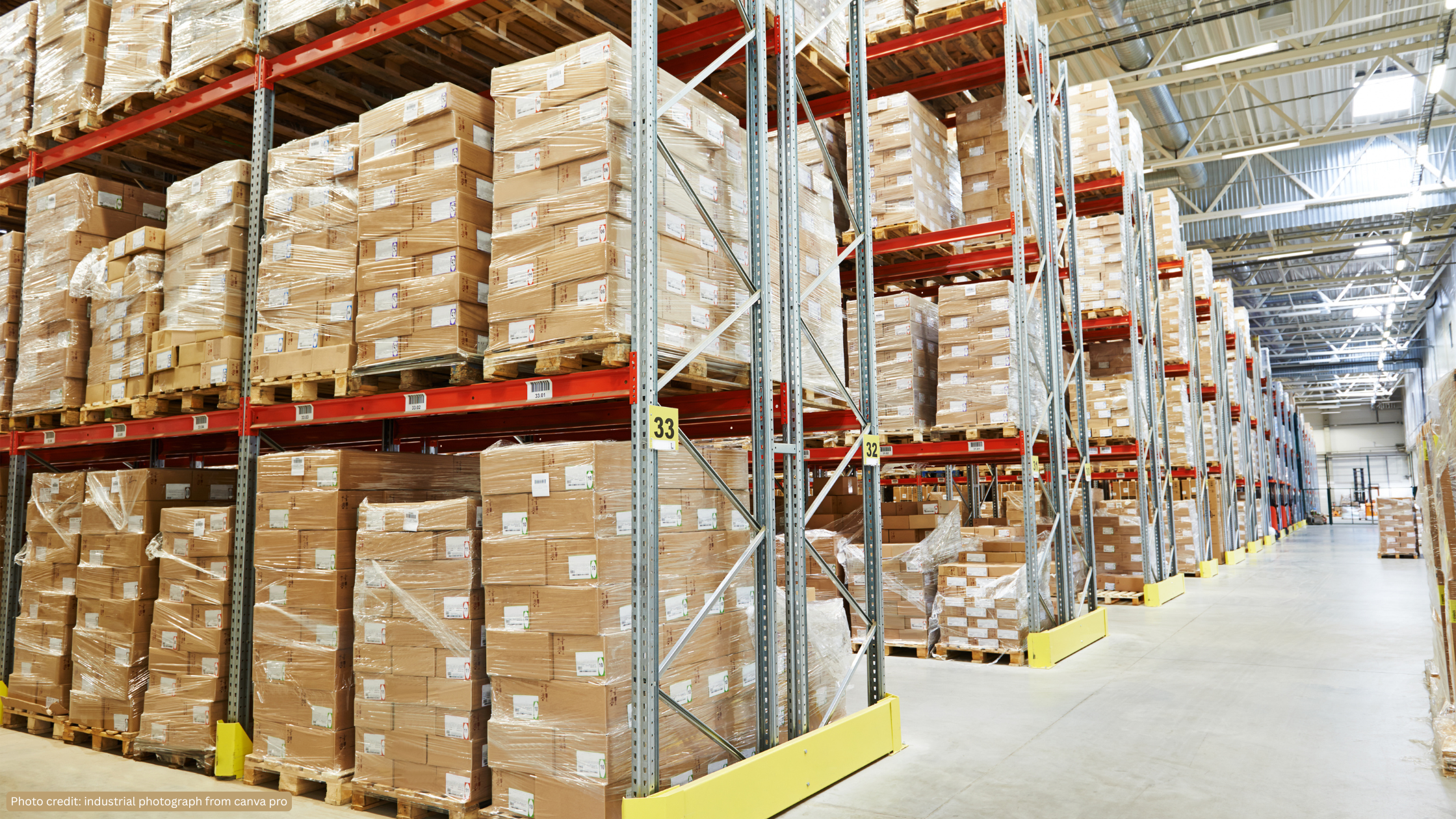
Warehouse operators are under pressure to increase storage capacity and improve throughput without allowing space, labour and infrastructure costs to erode productivity. While automation often attracts attention, the physical design of a warehouse, including its racking configuration and use of vertical space, remains an important part of the investment decision.
Australia’s industrial property market provides some context for these decisions. JLL’s Q2 2026 research reported 1.18 million square metres of national industrial gross take-up across 105 occupier moves, while 2.1 million square metres of industrial warehouse space was under construction nationally. The activity points to continued investment in warehouse facilities, although it does not directly measure demand for storage infrastructure.
Marketix Digital estimates that Australia’s market for new pallet-racking installations is worth approximately $397 million annually, based on its modelling as at 17 September 2026. The estimate draws on several indicators, including warehouse construction activity, industrial property data, freight and logistics indicators, and project and pricing benchmarks.
However, Marketix has not published a comparable historical series or forecast for the market. The estimate therefore provides an indication of potential annual market value, rather than evidence that spending on pallet racking is growing. Its separate analysis identifies Melbourne, Sydney and Brisbane as representing about 84% of the modelled opportunity across five major industrial markets, not 84% of actual installation revenue.
Storage design shapes warehouse performance
Warehouse capacity involves more than the amount of floor space available. Operators must consider how many pallet positions a facility can accommodate, how quickly workers or automated systems can retrieve stock, and whether the layout supports the movement of goods through receiving, storage, picking and dispatch.
Racking configuration affects these decisions. Conventional selective racking provides direct access to individual pallet locations, while higher-density systems can store more goods within a given footprint but may impose different access and handling requirements. The right choice depends on inventory characteristics, product turnover, equipment, safety requirements and the level of selectivity an operation needs.
A configuration that maximises pallet positions does not automatically maximise throughput. If workers or equipment struggle to access fast-moving stock, additional storage density may create bottlenecks elsewhere in the operation. Operators need to assess storage and material movement together rather than optimise one measure in isolation.
The same principle applies when businesses introduce automation. Automated storage and retrieval systems, shuttles and conveyors depend on warehouse layouts that support reliable movement and retrieval. Storage infrastructure must work with the wider operating model, including warehouse management systems, replenishment processes and dispatch schedules.
Automation raises the stakes for infrastructure decisions
Major Australian warehouse projects show how businesses are combining storage capacity with automation and facility design.
Coles’ automated distribution centre at Redbank in Queensland was designed to process up to four million cases a week. The retailer said the facility could process twice as many cases and hold twice as many pallets as one of its existing distribution centres, while using half the total footprint of its current distribution centre operations. The project illustrates how businesses can combine storage configuration and automation to increase capacity within a more compact network.
In Victoria, NewCold opened a $200 million expansion of its Truganina cold-storage operations in September 2026, adding 80,000 pallet positions. The expansion brought the facility’s capacity to 180,000 pallet positions, while its two Truganina facilities now provide a combined 405,000 positions across frozen, chilled and ambient storage.
These investments demonstrate different approaches to capacity planning, but they do not establish a single model for every warehouse. A large automated distribution centre has different volume, capital and operating requirements from a smaller warehouse that handles a varied product range or fluctuating order volumes.
For operators, the question is not simply whether to automate or add storage. It is whether the proposed configuration addresses the constraints that currently limit performance.
Measure the operation before expanding capacity
Before committing capital, businesses need a clear view of how their existing facilities perform. Useful measures include storage utilisation, inventory dwell time, picking rates, replenishment activity, travel distances, order cycle times and the frequency of congestion or handling exceptions.
These measures can help identify whether a facility lacks physical capacity or whether its existing space is poorly configured. They can also show whether a business needs more pallet positions, better inventory placement, revised workflows or a broader investment in automation.
Operators should also account for future flexibility. Product ranges change, order profiles fluctuate and seasonal peaks can put pressure on storage and dispatch. A system that performs well under current conditions may struggle if it cannot accommodate different pallet sizes, inventory profiles or throughput requirements.
Safety and maintenance also matter. Racking and handling systems must suit the loads, equipment and operating conditions they support. Businesses should consider inspection, maintenance, staff training and the operational consequences of equipment failure alongside the expected capacity gains.
As warehouse networks evolve, storage infrastructure remains a core operational decision rather than a standalone equipment purchase. Automation can increase speed and capacity, but the benefits depend on how well the building, storage system, inventory processes and material-handling equipment work together.
For supply chain operators, the goal is not to maximise storage density or automation for its own sake. It is to build a warehouse configuration that supports reliable throughput, uses space effectively and can adapt as demand changes.
Also read: When does warehouse automation make sense for smaller operators?

Yvette is a Content Producer at Akolade, producing stories for Supply Chain Channel, an Australian learning ecosystem created to address the need for information, networking, case studies, and empowerment for everyone in the supply chain sector.