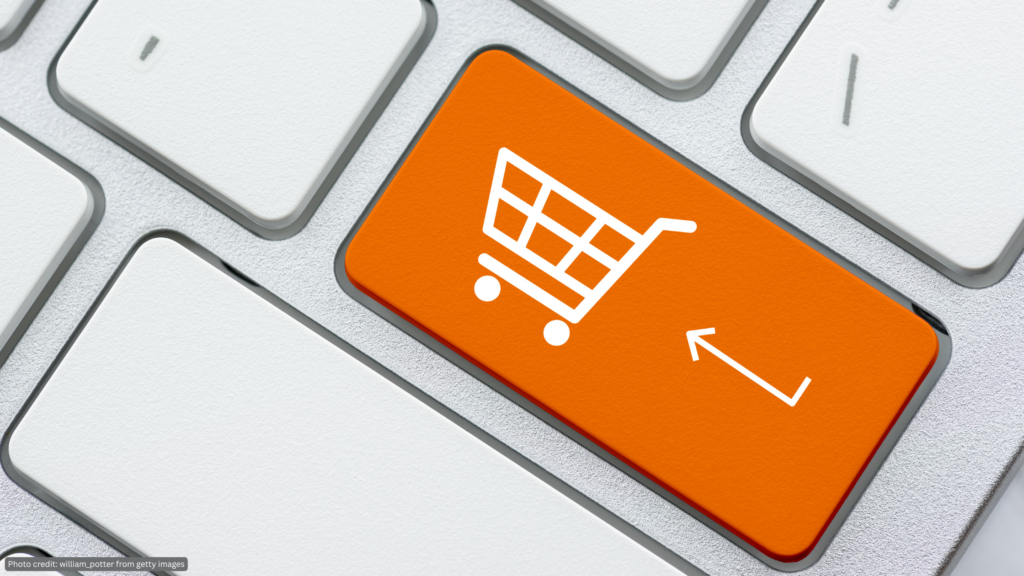


Customers increasingly expect supply chains to move at digital speed.
An order placed online can create an expectation of rapid fulfilment, accurate tracking, flexible delivery and easy returns. But behind that experience is a physical network of warehouses, workers, vehicles, inventory and transport routes that still has to move the product.
The gap between those two realities is becoming a bigger challenge for supply chain operators.
Australia’s online retail market continues to grow, with $82.6 billion spent online in 2025, up 14 per cent from the previous year. Australia Post’s latest eCommerce Report also found that 69 per cent of shoppers want a range of delivery options at checkout, while 26 per cent expect same- or next-day delivery when a purchase is urgent.
The expectation is clear.
Meeting it consistently is harder.
Every delivery promise has a physical requirement
A customer sees a delivery date.
A supply chain sees a series of decisions that have to happen before that date.
Inventory needs to be available. The order needs to be processed. Warehouse labour needs to pick and pack it. Transport capacity needs to be available. The shipment needs to move through the network without significant disruption.
If any link fails, the delivery promise can fail with it.
This is why faster delivery is not simply a transport problem.
A retailer cannot reliably promise next-day delivery if its inventory sits hundreds or thousands of kilometres from the customer. A warehouse cannot increase same-day order volumes indefinitely without additional labour or automation. A carrier cannot provide flexible delivery options without the network capacity to support them.
Speed is therefore a property of the whole supply chain.
Faster does not always mean better
The pressure to shorten delivery times can also create unintended costs.
A business may position inventory closer to customers to reduce delivery times, but holding stock across more locations can increase inventory and warehouse costs.
It may use premium transport to meet an urgent order, but that increases freight cost.
It may operate additional fulfilment shifts during peak periods, but that requires more labour and capacity.
It may offer multiple delivery options, but each option introduces another operational pathway to manage.
The result is a trade-off between customer convenience and the cost of delivering it.
That trade-off becomes particularly important in Australia, where businesses often serve large geographic areas from relatively concentrated logistics networks.
Choice adds complexity
Customers are not only asking for faster delivery. They increasingly want control over how and where their orders arrive.
Australia Post’s 2026 eCommerce Report found that 69 per cent of shoppers want a range of delivery options at checkout, including out-of-home collection and returns.
That flexibility can improve the customer experience.
But from an operational perspective, home delivery, parcel lockers, collection points, store pickup and other fulfilment options require different processes.
The network needs to know where inventory is located, which destination the customer has selected, how the order should be routed and which transport service can complete the movement.
Choice therefore creates value for customers only when the supply chain can support it efficiently.
The last mile is not the whole problem
Delivery expectations often focus attention on the final journey to the customer.
But the ability to deliver quickly can depend on decisions made much earlier.
Inventory may have arrived through an international supply chain months before the customer places an order. It may then move between distribution centres, stores or 3PL facilities before reaching the fulfilment point.
If inbound freight is delayed, the problem can eventually appear to the customer as a missed delivery promise.
This is why customer experience and supply-chain planning cannot be separated.
A delivery promise reflects the condition of the entire network, not just the final carrier.
Reliability can matter more than speed
There is also a distinction between fast delivery and reliable delivery.
A business may not need to deliver every order the next day if it can provide an accurate delivery commitment and consistently meet it.
Australia Post’s 2025 eCommerce research found that 85 per cent of shoppers expected a reliable delivery experience to be the most important factor in trusting online retailers over the following five years.
That suggests businesses should be careful about competing solely on speed.
A shorter delivery promise that is regularly missed can create more frustration than a slightly longer promise that is consistently achieved.
For supply chain operators, improving the accuracy of the promise may therefore be as important as shortening it.
Capacity ultimately sets the limit
Technology can help businesses allocate inventory, optimise routes and provide customers with better visibility.
But technology cannot remove physical constraints.
A warehouse still has a finite number of docks and picking locations. A transport network still has limited road, rail and vehicle capacity. A distribution centre still needs people or automation to process orders.
This becomes especially visible during demand peaks, when many businesses attempt to increase throughput at the same time.
The challenge is not simply how quickly a supply chain can operate at its maximum.
It is whether that level of performance can be sustained without creating excessive cost or compromising reliability.
Designing the promise around the network
The strongest customer propositions may therefore be those designed around what the supply chain can consistently deliver.
That can mean positioning inventory strategically, setting realistic delivery windows, using multiple fulfilment locations where they make economic sense and giving customers useful delivery choices without creating unnecessary complexity.
It can also mean being transparent when a faster option carries a higher cost.
The objective is not to slow down fulfilment.
It is to avoid making promises that the physical network cannot reliably support.
As online shopping continues to grow, delivery will remain a visible part of the customer experience. But behind every delivery promise sits a much larger operational system.
The supply chains that perform best may not be those that promise the fastest possible delivery.
They may be those that understand exactly what their network can deliver and build the customer promise around that reality.
Also read: Last-mile matters: The hidden battle behind retail delivery speed

Yvette is a Content Producer at Akolade, producing stories for Supply Chain Channel, an Australian learning ecosystem created to address the need for information, networking, case studies, and empowerment for everyone in the supply chain sector.